Shower safety bars are the anchor purchase, but they work as part of a system: bars for the transfers ($12–$39), a seat for the standing fatigue ($45–$120), a non-slip mat for the footing ($10–$22), and a handheld showerhead that makes seated bathing practical ($34.99). The full system costs $110–$220 at July 2026 verified prices — assembled below, piece by piece, with honest notes on what each element does and does not protect against, and the free-installation programs many families never hear about.
Table of Contents
The shower safety system at a glance
| Layer | Product & price (verified July 2026) | Protects against | Doesn’t protect against |
|---|---|---|---|
| Safety bars | Carex from $12.24; Vive $17.99–$38.99 | Slips during transfers and turns | Standing fatigue, blackouts |
| Shower seat | Carex $45.23–$75.38; Elenker $99.99–$189.99 | Fatigue, dizziness while washing | The step over a tub wall |
| Non-slip mats | Vive $9.99–$21.99 | Wet-floor traction loss | Loss of balance from above |
| Handheld showerhead | Vive $34.99 | Reaching/leaning while seated | — (enabler for the seat) |
| Emergency response | Waterproof button/watch | Lying undiscovered after a fall | The fall itself |
Layer one: shower safety bars — what to buy and where they go
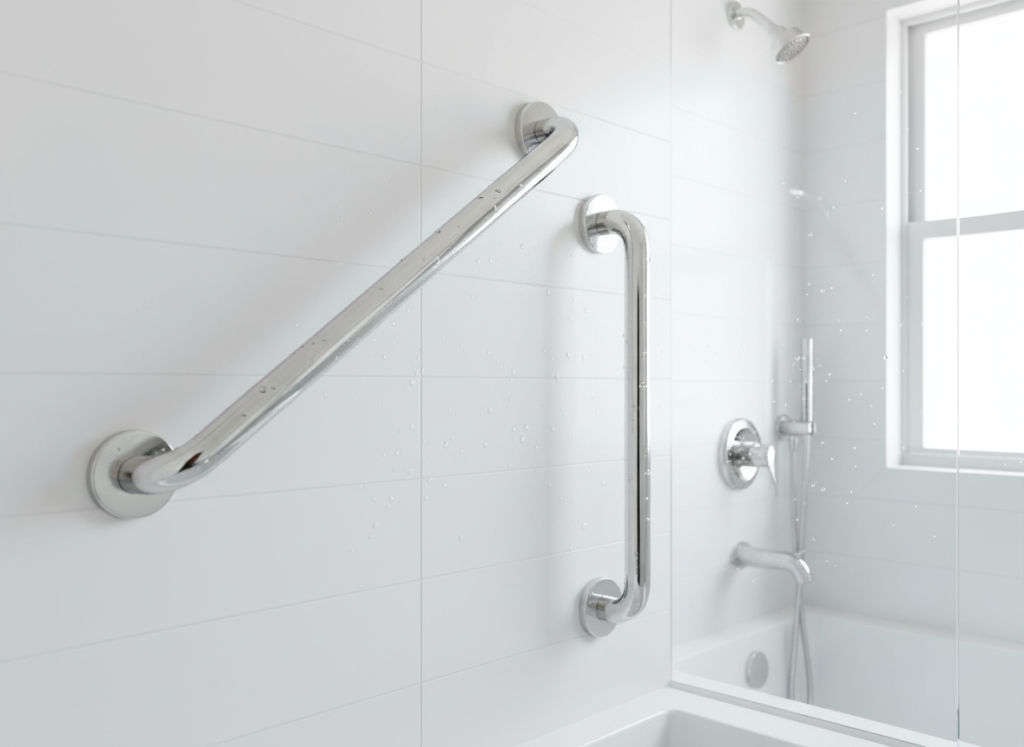
Three shower safety bars cover a standard shower: vertical at the entrance (the step-in stabiliser), horizontal at 33–36 inches on the long wall (the cruising and catch rail), and a shorter bar at seat height if a chair lives in the shower. The Carex Textured Wall Grab Bar (from $23.55, 12–32 inch lengths, stainless, verified July 2026) and Vive’s Metal Grab Bar ($17.99–$38.99) are the straightforward buys — textured grip over smooth chrome, 1.25–1.5 inch diameter, screw-mounted into studs or grab-bar-rated toggle anchors. The full installation how-to (stud finding, tile drilling, the no-stud toggle method, when to hire out) is its own topic; the short version is that the ADA 250 lb rating applies to the whole installed system, so unrated anchors and suction cups disqualify a bar as fall protection no matter what the packaging says.
Layer two: somewhere to sit
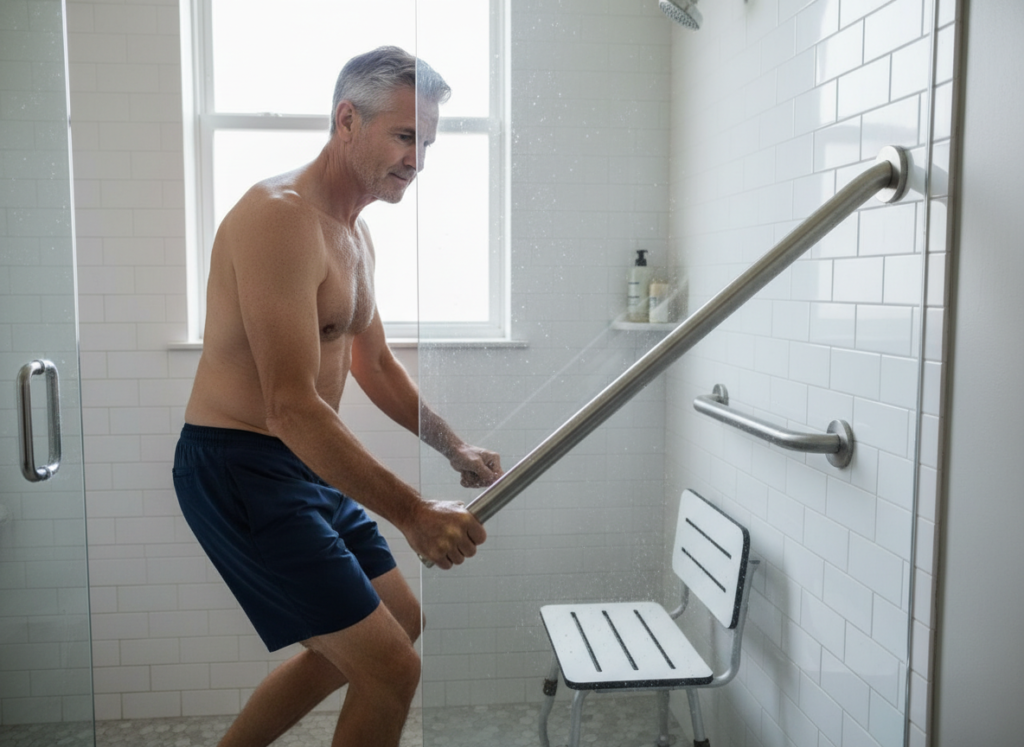
Most senior shower falls are not dramatic slips — they are legs quietly running out mid-shower, a moment of dizziness under hot water, blood pressure sagging after five minutes of standing. Bars do not fix that; a seat does. The Carex Shower Chair ($45.23) covers the standard case; the Shower Chair with Padded Arms ($75.38) adds push-up support for weak quadriceps, and the Compact Round Stool ($46.09) fits stalls too small for a chair with a back.
For heavier users and wet rooms, Elenker’s heavy-duty line starts with the KLD-3329 360° swivel chair at $99.99 — the swivel matters because it removes the seated torso-twist that unbalances people on fixed chairs. A parent who resists “a shower chair” will often accept “a teak-look stool” — the category has quietly become a spa product, and the framing is free.
Seats need the handheld showerhead to be useful: washing under a fixed overhead spray while seated means leaning out of the seat, which defeats it. Vive’s Handheld Shower Head ($34.99) with a 60-inch-plus hose and a pause button is the standard fitting — a ten-minute swap onto the existing shower arm, reversible for rentals.
Layer three: the floor
Two mats, $30 total: a suction mat inside the shower (Vive’s 22×22 inch shower mat, $21.99, or the 20×20 at $9.99) and a rubber-backed absorbent mat at the exit where wet feet meet tile. Press suction mats onto a dry floor, peel and rinse them weekly (soap film builds underneath and defeats the suction), and replace them when the cups stiffen. For textured or stone shower floors where suction fails, anti-slip adhesive strips do the same job permanently.
Layer four: heat, light and the door
Three cheap, unglamorous risks worth closing while the toolbox is out. Scald and syncope: water heaters above 120°F both scald aging skin and trigger the hot-water dizziness that folds knees; the thermostat costs nothing to turn down. Light: a shower dim enough to hide the wet patch is a hazard — a bright, moisture-rated fixture or even a battery motion light changes the room.
The door: a bathroom door that locks from inside only delays rescue; swap the privacy lock for one with an external emergency release, or agree on an unlocked-door rule for shower time. None of these appear in product roundups, and all three appear in fall reports.
A note on long-handled washing aids, since they belong to this system even though they prevent strain rather than falls: a curved long-handled sponge keeps feet washable without bending past safe balance, and a back brush does the same for shoulders that no longer rotate. Vive’s Body Brush ($14.99) and Lotion Applicator ($16.99) cover the reach problem for under $35 combined — small purchases that remove two of the most balance-hostile motions in the routine, the forward bend and the behind-the-back reach.
Layer five: when the fall happens anyway
Every layer above reduces probability; none reduces it to zero, and the bathroom is where seniors fall behind a closed door, wet, and out of earshot. The response layer is a waterproof wearable — shower-rated by design because manufacturers know exactly where their buttons get pressed. Our guides to emergency buttons for seniors and medical alert necklaces cover the options; the one non-negotiable is that the device actually goes into the shower rather than waiting on the vanity. A $30-a-month monitored pendant that hangs on a hook during the shower protects the hook.
Free grab bar installation for seniors: the real programs
“Free grab bar installation for seniors” is a heavily searched phrase and, unusually, the free options are real — they are just administrative rather than commercial. Area Agencies on Aging (find yours via the federal Eldercare Locator) run or refer to home-modification programs that install shower safety bars at no cost to eligible seniors. VA HISA grants fund bathroom safety hardware for veterans, service-connected or not.
State Medicaid HCBS waivers cover minor home modifications in most states for waiver enrollees. Rebuilding Together and Habitat’s aging-in-place programs do volunteer installations for low-income homeowners. The catch on all four is lead time — weeks to months — so the sensible play for an at-risk parent is one self-installed or handyman bar at the most urgent spot now, and the program application for the complete set the same week.
Renters can build the whole system except the drilled bars: clamp-on tub rails, freestanding seats, mats, and the showerhead swap are all reversible. For the bars themselves, ask the landlord in writing — under the Fair Housing Act, reasonable accessibility modifications at the tenant’s expense are hard to refuse when a doctor’s note documents need, and many landlords say yes to professionally installed bars that stay with the unit.
Why single-purchase fixes disappoint
The pattern behind most “we bought a grab bar and Dad still fell” stories is a mismatch between what was bought and how the fall actually happened. Fall reports from bathroom incidents sort into four mechanisms: traction loss (feet slide — mats fix this), balance loss during transfer (the body pivots past its base — bars fix this), collapse (legs or blood pressure give out — seats and temperature fix this), and incapacitation (stroke, cardiac event — only the response layer helps). Shower safety bars cannot catch a blackout; a mat cannot stop a transfer pivot; a pendant on the vanity helps nobody.
Walk through which mechanisms your parent is actually at risk for — their doctor can rank them in one conversation — and weight the spending accordingly. The $200 full system exists because most seniors over 75 carry meaningful risk in at least three of the four columns.
Matching the system to the person: three shower profiles
The independent 75-year-old with one scare. She slipped, caught the door frame, and mentioned it once. She needs the prevention layers before habit resumes: three shower safety bars, two mats, thermostat check — about $100 and a Saturday — and no seat yet, because unnecessary equipment breeds resentment of the necessary kind. Revisit the seat when standing through a whole shower stops being comfortable, and she will tell you — indirectly — when that happens.
The 82-year-old with COPD or heart failure. Standing fatigue is the certainty, not the risk. The seat and handheld head are the core purchase (from $80 combined), bars support the transfers in and out of the seat, and water temperature discipline matters double — heat plus exertion is the syncope recipe. His shower should be reorganised around sitting: soap in reach of the seat, towel at the seated exit point.
The parent with Parkinson’s or post-stroke weakness. Freezing, asymmetry and unreliable recovery mean the full system on day one, an occupational therapist’s placement advice rather than the generic heights (their strong side dictates everything), and a serious look at Elenker’s swivel-seat chair ($99.99) so no torso rotation happens on a wet seat. This is also the profile where the response wearable is least optional — falls here tend to be un-witnessed and un-shouted.
Budget note for families assembling the system in stages: the sequence that front-loads protection is bars and mats in week one (the transfer and traction mechanisms cause the most injuries), seat and showerhead in week two, wash aids and hardware tweaks in week three. Spreading $200 over three weeks loses almost nothing against buying it all at once — what loses everything is the common alternative of buying one item, feeling finished, and revisiting the subject after an incident. Put the remaining purchases on the calendar before the first box arrives.
The 15-minute monthly check
Shower safety equipment degrades quietly in the wettest room of the house. Monthly: yank-test the shower safety bars (a bar that shifts a millimetre today shifts an inch by winter), peel and rinse the suction mats, run a palm over grip surfaces for soap-film slickness, check the showerhead hose for cracks at the fittings, and confirm the emergency wearable is actually waterproof-rated and actually worn — batteries and habits both fade. Fifteen minutes on the first Sunday of the month keeps a $200 system performing like the day it went in; the alternative maintenance schedule is called an emergency room visit.
Full comparison
| Product | Price | Capacity | Role | Where to buy |
|---|---|---|---|---|
| Carex Textured Wall Grab Bar | from $23.55 | 250 lb system | Transfer bar | Carex |
| Vive Metal Grab Bar | $17.99–$38.99 | 250–300 lbs | Transfer bar | Vive Health (no affiliation) |
| Carex Shower Chair | $45.23 | 250–300 lbs | Seated bathing | Carex |
| Carex Shower Chair, Padded Arms | $75.38 | 250–300 lbs | Seat + push-up support | Carex |
| Elenker KLD-3329 Swivel Chair | $99.99 | Heavy duty | Swivel seated bathing | Elenker |
| Vive 22×22 Shower Mat | $21.99 | — | Traction | Vive Health (no affiliation) |
| Vive Handheld Shower Head | $34.99 | — | Seated washing | Vive Health (no affiliation) |
Frequently asked questions
What are the best shower safety bars for the elderly?
The best shower safety bars for elderly users are textured stainless bars, 1.25–1.5 inches in diameter, screw-mounted and rated to 250 lbs as an installed system — the Carex Textured Wall Grab Bar (from $23.55) and Vive Metal Grab Bar ($17.99–$38.99) both qualify. Placement matters as much as product: entrance, long wall at 33–36 inches, and beside any seat.
How can I get free grab bar installation for seniors?
Four real routes: your Area Agency on Aging’s home-modification program (start at the Eldercare Locator), VA HISA grants for veterans, state Medicaid HCBS waivers, and volunteer programs like Rebuilding Together. All involve applications and lead time, so install one urgent bar yourself while the paperwork runs.
What shower aids do elderly people actually need?
In priority order: correctly mounted grab bars, a shower seat with a handheld showerhead, non-slip mats inside and outside, water temperature capped at 120°F, decent lighting, and a waterproof way to call for help. Long-handled sponges and wash aids join the list when shoulder mobility shrinks.
Should shower safety bars be vertical or horizontal?
Both, by job: vertical at the entrance so hands grip at their own best height during the step-in; horizontal at 33–36 inches inside for cruising and catching; angled bars split the difference for households with mixed heights. The wrong answer is diagonal-everywhere — wet hands slide down diagonal bars.
How much does it cost to make a shower safe for seniors?
$110–$220 for the complete system at verified July 2026 prices: three bars ($40–$100 in hardware), a seat ($45–$100), two mats ($25–$30), and a handheld showerhead ($34.99). Professional bar installation adds $75–$150 per bar; eligible seniors can get that part free through aging-services programs.
Do textured grab bars matter in the shower?
Yes — more than most spec-sheet differences. Smooth chrome turns slick under soap film exactly when grip matters most; knurled or textured surfaces keep working wet. If a household already has smooth bars, textured adhesive grip tape made for grab bars is a $10 retrofit.
The bottom line
Build the system in order: shower safety bars this week (bought for under $40 each, installed into structure), the seat and handheld head next ($80–$135 together), mats and the thermostat the same afternoon, and the response wearable before the month is out. Every layer covers a failure the others cannot, which is why the complete $200 system outperforms any single $200 purchase — and why the families who stop at one grab bar are usually back shopping after the near-miss the bar could not reach.