A rinse-free bath sponge is a soap-infused disposable sponge that lathers with a splash of water and needs no rinsing — dampen, wash, towel dry — which is why they have become the standard for bathing bedridden seniors, post-surgery recovery, and shower-averse dementia care. Scrubzz and HYGIENJOY 25-count packs run roughly $12–$25 at Walmart and Amazon (prices vary by seller — check current listings). This guide covers how they work, when they beat a traditional sponge bath, and the wider family of bath and wiping aids — verified from $14.99 — that keep personal care dignified when mobility shrinks.
Table of Contents
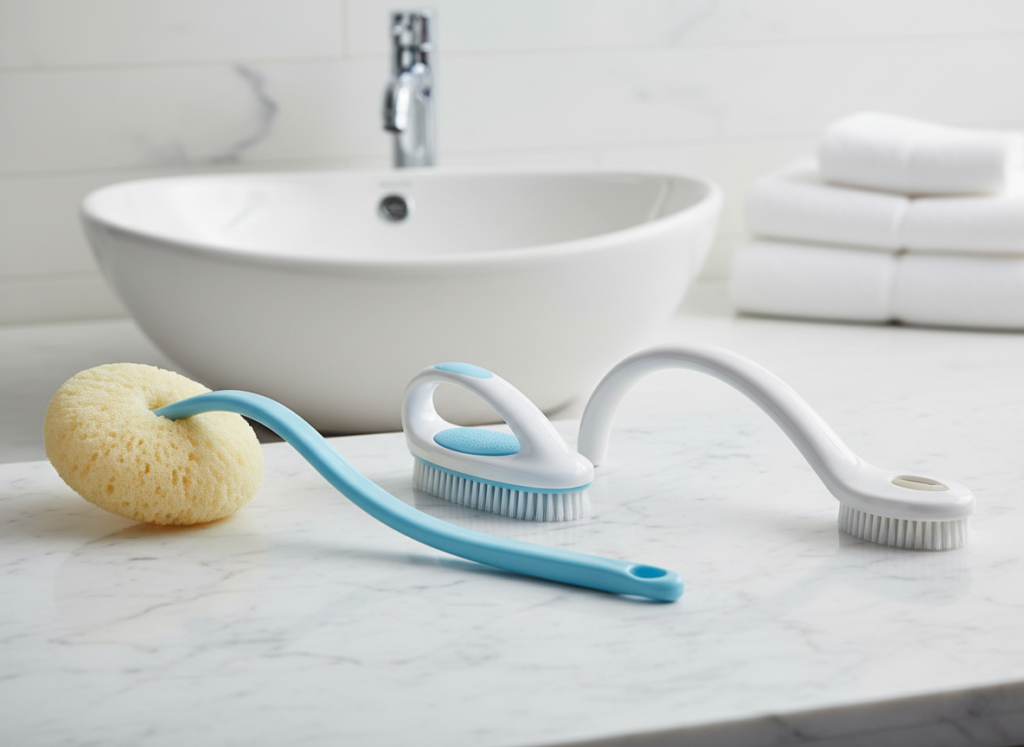
Rinse-Free Bath Sponge and wiping aids at a glance
| Product | Price | Solves | Best for |
|---|---|---|---|
| Rinse-free bath sponges (Scrubzz, HYGIENJOY) | Varies — check retailer | Bathing without a shower or rinse water | Bedridden, post-surgery, dementia care |
| Vive Wiping Aid | $17.99 (verified July 2026) | Toilet hygiene with limited reach | Shoulder/hip mobility loss, obesity |
| Vive Tong Wiping Aid | $16.99 | Same, tong-grip design | Weak grip strength |
| Vive Body Brush | $14.99 | Washing feet and back without bending | Balance-limited standing bathers |
| Vive Lotion Applicator | $16.99 | Skin care on unreachable areas | Diabetics doing foot/skin care |
How rinse-free bath sponge actually works
Each sponge ships dry, pre-loaded with a pH-balanced, hypoallergenic cleanser. Add a small splash of water, work it to a lather over one region of the body, and towel dry — no rinse, no residue, no basin of greying water. A full bed bath takes one to two sponges and about fifteen minutes, versus the multi-towel, multi-basin production of a traditional sponge bath. They stay usable indefinitely while dry, which also makes them the thing to keep in the caravan, the hospital go-bag, and the power-cut kit.
Honest limits: they are a hygiene tool, not a spa experience — no warmth of immersion, and heavily soiled skin still wants running water. Skin gets clean; hair needs its own no-rinse shampoo cap product. And on very fragile or broken skin, anything soap-infused needs the nurse’s or wound team’s sign-off first.
When rinse-free bath sponge beats the traditional sponge bath
Four situations, from families and home-care aides who live this routine. Post-surgery weeks: a parent recovering from hip replacement surgery who cannot yet manage the transfer bench gets clean safely in bed — and independently for most of the body, which matters more to morale than families expect. Bedridden care: the no-basin workflow halves bath time, and halves the number of cold, wet, exposed minutes — the part of bed baths seniors hate most.
Dementia and shower fear: when running water triggers distress (common in mid-stage dementia), a warm room, one limb at a time, and a rinse-free sponge preserves hygiene without the fight; care homes quietly run on this method. Caregiver-spouse realities: an 80-year-old husband cannot safely shower his wife alone, but he can manage a fifteen-minute bed bath at the dining chair. The sponge is not a lesser bath in these situations — it is the version that actually happens, consistently, without injury.
Buying notes: Scrubzz is the recognisable brand (25-count packs at Walmart and on Amazon, including a sensitive-skin line), HYGIENJOY and Nurture Valley sell equivalent extra-thick versions — Nurture Valley’s run 9.5 inches square, one-sponge-per-bath territory. Prices move around by seller and pack size, so check the current listing; we have no affiliate relationship with any of the three, and recommend them on merit. For the water-warming, basin-based version of this routine, the supporting kit is a stack of microfibre towels and a waterproof bed pad — under $30 anywhere.
Travel deserves a mention because it is where this kit earns unexpected keep: a zip bag with four of the sponges, the wiping wand, and a shampoo cap turns family visits, hospital stays and long drives from hygiene emergencies into non-events. Hospital discharge is the other moment — wards send seniors home with wound-care instructions that say “no showers,” and the family that already owns the rinse-free routine skips the worst week of improvising with kitchen towels.
Wiping aids: the purchase nobody discusses and everybody delays
Toilet hygiene is the mobility loss with the highest dignity cost and the lowest conversation rate — seniors quietly manage with worsening reach for months before anyone knows. The tools are simple extenders: Vive’s Wiping Aid ($17.99, verified July 2026) is a curved 15-inch wand that grips toilet paper and releases it with a button, the Tong Wiping Aid ($16.99) uses a tong grip for weak hands, and replacement soft tips come in 6-packs ($16.99). Searches for “wiping aid for obese” land on the same products — the reach geometry is the same problem regardless of cause, and the curved wands are rated for it.
Two placement tips from occupational therapy practice: keep the aid in a discreet caddy beside the toilet (visible equals used; in the vanity drawer equals abandoned), and pair it with the toilet frame from our wider bathroom setup — stable sitting posture is half of what makes the aid workable. The upgrade path beyond wands is a bidet seat, which removes the task entirely; wands win on cost, portability and zero installation.
Reach extenders for the shower: brushes and applicators
For seniors still showering, the risk is not the washing — it is the bending and behind-the-back reaching that washing demands. Vive’s Body Brush ($14.99) puts feet, calves and back inside a straight-spine reach; the Lotion Applicator ($16.99, with $16.99 replacement pad sets) does the same for moisturising — which is medical, not cosmetic, for diabetic skin and for the paper-thin skin of long-term steroid users. A curved brush plus applicator costs under $35 and removes the forward-bend and the shoulder-wrench from the daily routine; cheap prevention for the two motions most likely to end with a head against tile. Both belong in the seated-shower setup alongside the chair and handheld showerhead covered in our bathroom safety guides‘ companion pieces.

The bed bath, step by step, with a rinse-free bath sponge
For the family caregiver doing this for the first time, the full sequence — consistent with the clinical bed-bathing guidance at MedlinePlus. Warm the room first — comfort at 75°F beats modesty draping at 68°F. Lay a waterproof pad, undress only the region being washed, and keep everything else covered with a dry towel; cold exposure, not soap, is what makes seniors dread bed baths. Order: face and neck (plain damp cloth, no cleanser near eyes), arms and hands, chest and abdomen, legs and feet, then back (rolled to one side), and the perineal area last with its own dedicated sponge, front to back.
Dampen each rinse-free sponge lightly — sopping wet defeats the no-rinse chemistry — lather, wipe, and towel the region dry before uncovering the next. Moisturise heels, elbows, hips and tailbone while they are exposed: pressure-point skin care rides along free. Total time with practice: fifteen minutes, two sponges, zero basins.
Frequency honesty: daily full baths are a hospital habit, not a home necessity. Two to three full washes a week, with daily attention to face, hands, underarms and perineal care, keeps a low-activity senior genuinely clean without stripping fragile skin — a schedule most geriatric nurses will endorse out loud.
A note on skin observation, because the bath is also the check-up: caregivers washing a low-mobility senior are the early-warning system for pressure injuries, and the moments skin is exposed for washing are the moments to look. Red patches over heels, tailbone, hips and elbows that do not blanch (fade briefly) under a fingertip press are stage-one pressure damage and a same-week call to the doctor or district nurse — caught at that stage, they resolve with repositioning; missed, they become the wounds that hospitalise. Fifteen seconds of looking per region, every bath, is the cheapest medical monitoring in home care.
Having the conversation nobody wants to start
Every product on this page requires either a parent admitting they need it or a caregiver raising it first. Scripts that work, from families past this point: for the sponge bath, lead with logistics, not decline — “the surgeon said no showers for six weeks, this is the six-week workaround”; for the wiping aid, buy it alongside something neutral and mention it once without ceremony — “that’s there if the hip makes things awkward, everyone post-surgery uses one”; for the brushes, frame them as what they are — back scrubbers sold in normal pharmacies to normal people. What fails: presenting any of it as evidence of decline, asking permission in a way that invites a dignity-defending no, or the adult child handling what a spouse or aide should. Match the helper to the task — hygiene help lands differently from a wife than from a daughter, and a $17.99 tool that lets a parent skip the helper entirely is the best outcome on this whole page.
Full comparison
| Product | Price | Size/spec | Where to buy |
|---|---|---|---|
| Scrubzz Rinse-Free Bath Sponges (25 ct) | Varies by seller | Soap-infused, water-activated | Walmart, Amazon (no affiliation) |
| HYGIENJOY Rinse-Free Sponges (25 ct) | Varies by seller | Extra thick, no residue | Amazon (no affiliation) |
| Nurture Valley Sponge Bath Wipes | Varies by seller | 9.5″ × 9.5″, ultra-thick | Amazon (no affiliation) |
| Vive Wiping Aid | $17.99 | Curved wand, release button | Vive Health (no affiliation) |
| Vive Tong Wiping Aid | $16.99 | Tong grip | Vive Health (no affiliation) |
| Vive Wiping Aid Tips (6-pack) | $16.99 | Replacement soft tips | Vive Health (no affiliation) |
| Vive Body Brush | $14.99 | Long curved handle | Vive Health (no affiliation) |
| Vive Lotion Applicator | $16.99 | Long handle, washable pads | Vive Health (no affiliation) |
Building the complete personal-care kit
For a household heading into a post-surgery recovery or a new home-care arrangement, the full kit runs about $85 plus sponges: wiping wand ($17.99), body brush ($14.99), lotion applicator ($16.99), replacement tips and pads (about $34 across both), plus a 25-count sponge pack and a couple of shampoo caps from the supermarket. Add the environmental pieces already covered elsewhere on this site — shower chair, handheld showerhead, toilet frame — and the personal-care side of aging at home is equipped for under $300 all-in. Keep the consumables on subscription or a repeating shopping-list entry: the kit only works while the sponge box is never empty, and “we ran out” is how households slide back to unsafe improvisation. For the broader picture of funding any of this — HSA/FSA eligibility applies to most items here — our guide to free and subsidised equipment for seniors covers the programs worth an application.
Frequently asked questions
How do rinse-free bath sponges work?
Each rinse-free bath sponge is pre-loaded with dry cleanser: dampen with a splash of water, lather over the skin, and towel dry. No rinsing and no soapy residue. A full bed bath uses one or two sponges and takes about fifteen minutes.
Are rinse-free bath wipes good for bedridden elderly people?
Yes — they are the standard tool for the job. No basin, no rinse water, fewer cold exposed minutes, and pH-balanced hypoallergenic formulas suit fragile skin. Get clinical sign-off first where skin is broken, and use a separate no-rinse shampoo cap for hair.
What is the best wiping aid for people who cannot reach?
A curved wand-style aid that grips and releases toilet paper — Vive’s Wiping Aid ($17.99) is the reference design, with a tong-grip version ($16.99) for weak hands. The same tools serve anyone whose reach is limited, whether by shoulder mobility, hip replacement precautions, or body size.
How do you give a bed bath to an elderly person?
Warm room, waterproof pad under them, one body region at a time — exposed, washed, dried, covered before moving on. Rinse-free sponges remove the basin-and-rinse steps; work top to bottom, save the perineal area for last with its own sponge, and moisturise pressure points while skin is accessible.
Can you wash hair with rinse-free bath sponges?
Not well — the rinse-free bath sponge is formulated for skin; use no-rinse shampoo caps instead: microwave-warmed caps that lather through massage and towel out, sold alongside the sponges at the same retailers for a few dollars each.
What bath aids help disabled adults shower independently?
The reach layer: a long-handled body brush ($14.99) for feet and back, a lotion applicator ($16.99) for skin care, plus the seating layer — shower chair and handheld showerhead — that turns showering into a stable seated task. Together they cover most of what an aide would otherwise do.
The bottom line
Match the aid to the situation, not the severity: a rinse-free bath sponge supply for anyone bathing outside a shower (keep a pack in the cupboard even if this week doesn’t need it), a $17.99 wiping wand the moment toilet reach becomes effortful — not the month after — and the $35 brush-and-applicator pair for every seated or balance-limited shower routine. These are the cheapest products on this site and the ones bought latest, because each one requires admitting something. Buy them before the admission is forced; dignity kept is easier than dignity recovered.