The pill timer alarm rang for three hours.
In This Guide
- Overview
- Comparison
- Best Options
- Our Recommendation
She was visiting when she realised it — her mother had not taken her 10am pills from the automatic pill dispenser with alarm for elderly on the counter, the alarm had been going off periodically, and her mother had been sitting in the garden entirely unaware. The local alarm was set to go off every fifteen minutes. Her mother’s hearing aid had been on the nightstand since breakfast. For further reading, see pill reminder research.
A local alarm that cannot be heard is not an alarm. And even a local alarm that is heard raises a question nobody asks before buying: what happens when the alarm goes off and your parent does not respond?
This guide answers that question. It covers the two fundamental alarm types in any automatic pill dispenser with alarm for elderly — local alarms and escalation alarms — and matches each to the situation where it is actually effective.
Two Types of Alarms — Local and Escalation — Automatic Pill Dispenser With Alarm For Elderly
Before comparing products, understand the distinction between the two alarm types available in this category. Caregivers evaluating automatic pill dispenser with alarm for elderly will find the key details in this section.
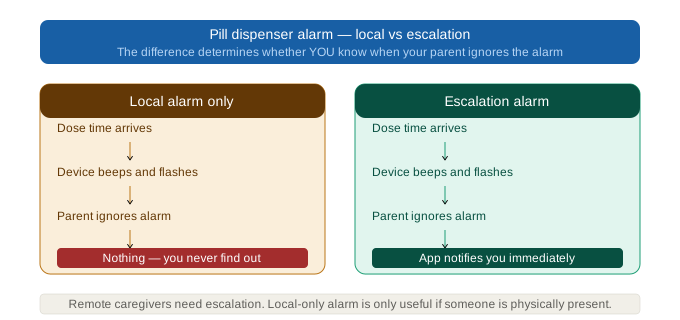
Local alarm: The automatic pill dispenser with alarm for elderly sounds an audible beep at the scheduled dose time. The alarm may repeat after a set interval if the pills are not taken. When the alarm cycle ends, nothing further happens. The alarm was for your parent only. You are not notified.
Escalation alarm: The automatic pill dispenser with alarm for elderly sounds an audible alarm AND, if your parent does not respond, sends a text message or phone call to designated caregiver contacts. The alert escalates — alarm to your parent, then notification to you, then notification to the next contact on the list. You receive a notification regardless of whether your parent heard or responded to the local alarm.
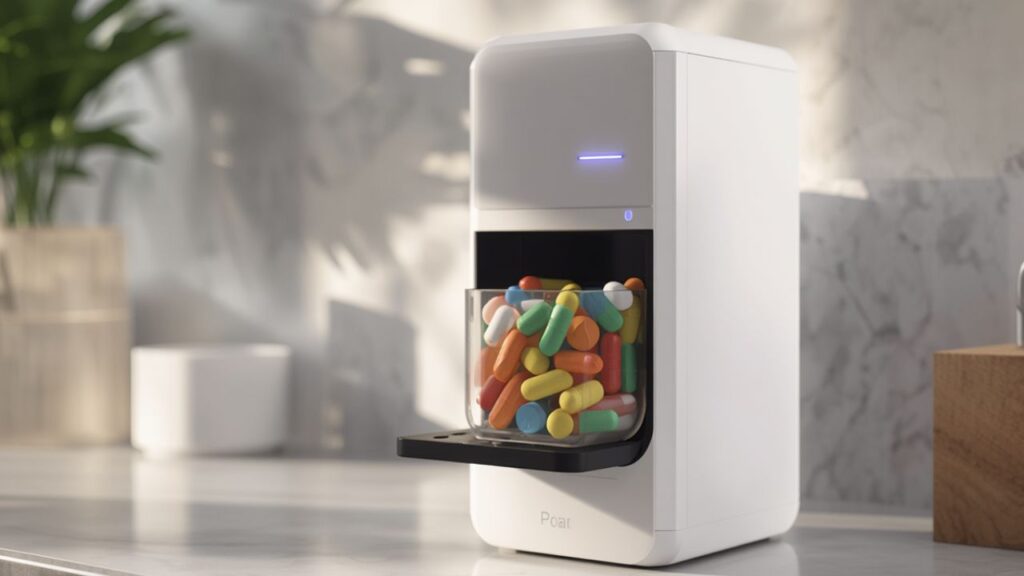
The practical difference: a local automatic pill dispenser with alarm for elderly requires your parent to hear it, understand it, and act on it. An escalation automatic pill dispenser with alarm for elderly ensures that even if your parent ignores or misses the local alarm, someone who can respond is notified.
For most caregivers, the question is not “which alarm is louder?” It is “what happens when the alarm is ignored?”
Local Alarm Dispensers — For Seniors Who Need a Nudge
Local alarm dispensers are appropriate when your parent is cognitively intact, responds reliably to alarms, and does not need a caregiver notification every time they take their pills. Caregivers evaluating automatic pill dispenser with alarm for elderly will find the key details in this section.
The caregiver is not the target audience of a local alarm. The senior is. If your parent hears the alarm and takes their pills consistently, a local alarm dispenser is the right and most cost-effective solution.
TabTimer ($29–$49, $0/mo) — Best Budget Local Alarm
TabTimer is a manual pill organiser with a programmable local alarm. The alarm sounds at each scheduled time. Your parent opens the correct compartment and takes their pills. When the alarm cycle ends, nothing further happens.
Appropriate for: Independent seniors who just need a scheduled reminder.
Not for: Hearing impairment, dementia, remote caregiving, any situation where the senior may not respond.
Year 3 total: ~$40
Bliss Meds ($69–$99, $0/mo) — Best Budget Locked Local Alarm
Bliss Meds adds locked dispensing to the local alarm — pills are secured between doses and released automatically at each scheduled time. The alarm sounds locally when a dose is ready. No caregiver notification.
Appropriate for: Seniors who need a locked automatic pill dispenser with alarm for elderly to prevent double-dosing risk, with a caregiver present to verify compliance. Budget constraint prevents subscription. Not for: Remote caregiving where notification is needed.
Year 3 total: $99
Pivotell ($99–$149, $0/mo) — Best Persistent Local Alarm
Pivotell’s key differentiator: its alarm repeats every few minutes until the pills are taken — rather than sounding once and going quiet. For a senior who hears the alarm but moves slowly, or who needs multiple prompts before acting, Pivotell’s persistent alarm provides more effective local reminding than a one-beep dispenser.
Locked rotary mechanism. Battery-powered. No subscription.
Appropriate for: Seniors who ignore single-beep alarms but respond to a persistent repeating alarm. Locked dispensing needed without remote alerts.
Year 3 total: $149
Escalation Alarm Dispensers — When the Alarm Alone Is Not Enough
Escalation alarm dispensers are for situations where the local alarm failing to produce a response is itself a problem — because you need to know when that happens.
For a senior with hearing loss who may not hear the alarm, for a senior with dementia who may hear the alarm and not act on it, or for a remote caregiver who cannot know whether the automatic pill dispenser with alarm for elderly was effective without a notification — escalation alarms bridge the gap between “the alarm went off” and “I know whether it worked.”
MedMinder Maya ($0–$30 + $35–$49/mo) — Best Escalation Alarm (Locked)
MedMinder Maya is the best automatic pill dispenser with alarm for elderly parents because it is the only device in the category that combines locked dispensing, a loud multi-modal alarm (sound + flashing light), and escalating caregiver notification.
When a dose time arrives:
1. The dispenser sounds a loud alarm (up to 85 dB) and flashes a light
2. If the senior does not take the pills within a set window, the dispenser texts and calls up to five designated caregiver contacts in priority order
3. If the primary contact does not respond, the next contact is tried
4. The escalation continues until someone confirms the situation is being addressed
85 dB is approximately the volume of a lawnmower — audible for most seniors with mild to moderate hearing loss. The flashing light provides a visual alert for seniors with significant hearing impairment.
The cellular plan (no Wi-Fi required) means the escalation alerts reach you regardless of internet status.
Device: $0–$30
Monthly: $35–$49
Lock: Yes
Alarm: 85 dB + flashing light + caregiver call escalation
Battery backup: 48 hours
Year 3 total: ~$1,290
Best for: Dementia — where a locked automatic pill dispenser with alarm for elderly is the only safe option. Hearing impairment. Remote caregiving where missed doses are a genuine medical concern. Any situation where the local alarm alone cannot be relied upon to produce compliance.
Hero ($149 + $36.95/mo) — Best Escalation Alarm (Unlocked)
Hero provides escalation alerts to the caregiver’s app when a dose is missed — text and email notification when the senior does not respond to the local alarm.
The alarm sounds at the dose time. If the pills are not taken within the configured window, the caregiver receives a text and email. This provides the remote notification element of escalation without the phone call escalation of MedMinder.
Device: $149–$179
Monthly: $36.95
Lock: Unlocked — not appropriate for dementia or double-dosing risk
Alarm: Local + text/email to caregiver app
Year 3 total: $1,479
Best for: Remote caregivers whose parent does not have dementia. The caregiver needs to know when the alarm is ignored, but phone call escalation is not required.
Alarm for Hearing-Impaired Seniors
This section addresses the gap every competitor misses entirely.
A standard automatic pill dispenser alarm ranges from 60–80 dB. For a senior with mild hearing loss, this may be audible. For a senior with moderate to severe hearing loss — particularly common in seniors over 75 — a standard alarm is functionally inaudible, especially if a hearing aid is not worn at all times.
For hearing-impaired seniors, the alarm features that matter are:
Volume above 80 dB: MedMinder Maya reaches 85 dB — the highest-volume alarm in the consumer category.
Visual alert (flashing light): MedMinder Maya includes a flashing light that provides a visual cue independent of sound.
Caregiver escalation: Even if the senior cannot hear the alarm, the caregiver escalation system notifies the caregiver regardless. For a senior with significant hearing loss, the caregiver escalation is the primary alert mechanism — the local alarm is secondary.
For moderate hearing loss: MedMinder Maya’s 85 dB alarm and flashing light are the strongest local alert options available.
For severe hearing loss where the senior cannot reliably respond to any alarm: the escalation alert to a caregiver (or a carer who is physically present) is the necessary backup.
What Happens When the Alarm Is Ignored?
This comparison is the most practically useful in the guide — and the one no competitor provides.
| Device | Alarm Sounds | Not Responded To — What Happens? |
|---|---|---|
| TabTimer | Beep, stops | Nothing |
| Bliss Meds | Beep, stops | Nothing (pills still dispensed) |
| Pivotell | Beep, repeats every few min | Repeats until pills taken |
| Hero | Beep, stops | Caregiver receives text + email |
| MedMinder Maya | 85 dB alarm + light | Caregiver receives text + phone call; next contact tried if no response |
For the most critical scenario — parent cannot or does not respond to the alarm — only Hero and MedMinder Maya generate a caregiver response. Of those two, only MedMinder Maya also prevents the senior from taking extra doses (locked).
3-Year Cost by Alarm Type
| Device | Alarm Type | Year 3 Total |
|---|---|---|
| TabTimer | Local beep | $40 |
| Bliss Meds | Local beep, locked | $99 |
| Pivotell | Local persistent, locked | $149 |
| Hero | Local + caregiver text | $1,479 |
| MedMinder Maya | Local 85dB + caregiver call, locked | ~$1,290 |
The cost premium between a local-only automatic pill dispenser with alarm for elderly ($40–$149) and an escalation model ($1,290–$1,479) is $1,140–$1,430 over three years. What that premium buys: a caregiver notification when the alarm does not produce compliance.
For caregivers who visit daily or speak with their parent every morning: the local alarm may be sufficient, and the premium is not justified.
For remote caregivers who cannot know whether the automatic pill dispenser with alarm for elderly produced compliance without a notification: the escalation premium is the difference between knowing and not knowing.
Frequently Asked Questions
Q: What is an automatic pill dispenser with alarm for elderly?
A: A device that stores pre-loaded medications and releases them at programmed times with an alarm. The alarm may be local only (sounds at the device, notifies the senior) or escalating (sounds at the device AND notifies the caregiver if not responded to).
Q: What is the loudest alarm on a pill dispenser?
A: MedMinder Maya — up to 85 dB, with a flashing light component for hearing-impaired seniors. Comparable to a lawnmower at close range.
Q: Which pill dispenser alarm will text me if my parent doesn’t take their pills?
A: Hero (text and email to caregiver app) and MedMinder Maya (text and phone call to multiple contacts with escalation).
Q: What happens if the alarm goes off and my parent doesn’t respond?
A: Local alarms (TabTimer, Bliss Meds, Pivotell): alarm eventually stops, nothing else happens. Hero: caregiver receives text and email notification. MedMinder Maya: caregiver receives text and phone call, next contact tried if no response.
Q: Is there an alarm pill dispenser for someone with hearing loss?
A: MedMinder Maya — 85 dB alarm plus flashing light visual alert. For severe hearing loss where no local alarm is reliably audible, the caregiver escalation system (call to caregiver phone) is the primary alert mechanism.
Q: How long does the alarm sound on a pill dispenser?
A: TabTimer and Bliss Meds: typically 60 seconds then stops. Pivotell: repeats every few minutes until pills are taken. MedMinder Maya: alarm continues and escalates to caregiver notification if not responded to within the configured window.
Q: My mum has hearing loss — which automatic pill dispenser with alarm for elderly has the loudest alarm plus a visual alert?
A: MedMinder Maya — 85 dB alarm (loudest in the consumer category) plus a flashing light for visual confirmation. For seniors with significant hearing impairment, the caregiver escalation system (phone call to caregiver when dose is missed) is also essential as a backup to the local alarm.
Q: My dad ignores the alarm — which pill dispenser will then call or text me if he doesn’t take his pills?
A: MedMinder Maya — calls and texts up to five designated contacts in priority order if the dose is not taken within the window. Hero — sends text and email to the caregiver app. MedMinder’s phone call escalation is the more persistent option if text notifications may be missed.
Q: What is the difference between a local alarm (beeps at my parent) and an escalation alarm (texts me)?
A: A local alarm notifies the senior at the device. If they do not respond, nothing else happens — the alarm eventually stops. An escalation alarm notifies the senior at the device AND, if they do not respond, sends a text and/or phone call to the designated caregiver. The escalation ensures you are informed regardless of whether your parent responded to the local alert.
Q: Which pill dispenser alarm is loud enough to wake someone up at night for their bedtime dose?
A: MedMinder Maya at 85 dB is the loudest alarm in the category. Pivotell’s persistent repeating alarm is effective for gradual waking. For a sleeping senior, a loud alarm next to the bed is more effective than a quiet beep across the room — consider placement as well as volume.
Q: Which automatic pill dispenser with alarm for elderly is best for someone with dementia who ignores regular beeps?
A: MedMinder Maya — for two reasons. First, the escalating caregiver notification means someone is alerted even when the senior ignores the local alarm. Second, it is locked, which prevents the dementia parent from taking extra doses even when they do acknowledge the alarm.
Our Final Recommendation
For seniors who respond reliably to a local alarm — no remote caregiving needed: Pivotell ($149, persistent local alarm, locked, no subscription) or Bliss Meds ($99, locked, no subscription). Pivotell Bliss Meds
For remote caregivers who need to know when the alarm is ignored — parent is cognitively intact: Hero (text alert, unlocked). Hero Health
For the most complete alarm and safety system — dementia, hearing impairment, or critical medication management: MedMinder Maya (85 dB + light + phone call escalation + locked dispensing). MedMinder Maya
The right alarm system is the one that reaches someone who can act on it — whether that is your parent at home or you on your phone.