She found last month’s blood pressure pills untouched in the weekly organiser.
In This Guide
- Overview
- Comparison
- Best Options
- Our Recommendation
Not a few pills. The whole month. Her mother had been filling it herself — or had been until she stopped, and nobody had noticed, because nobody was checking. She had assumed the system was working. The pills in the organiser proved it wasn’t.
That was the day she started searching for an automatic pill dispenser for seniors. Not a manual organiser. A machine that would dispense the right pills at the right time whether or not her mother remembered to open the right compartment.
If you are at that moment — or you want to get ahead of it — this guide is for you. We will explain exactly how automatic pill dispensers work, the single most important decision you need to make before choosing one (locked versus unlocked), and which device is right for your parent’s specific situation.
What Is an Automatic Pill Dispenser for Seniors?
An automatic pill dispenser is a device that stores your parent’s medications and releases them at programmed times — without your parent needing to open a compartment, remember which pill to take, or manage anything more complex than responding to an alarm.
At the most basic level: the dispenser is filled once (weekly or monthly, depending on the model), a schedule is programmed, and at each medication time the device sounds an alarm and releases the correct dose.
At the most advanced level: the dispenser connects to a smartphone app or cellular network, sends you a text message when your parent takes their dose, calls you when a dose is missed, and lets you update the schedule remotely from another city.
The difference between “basic” and “advanced” is the source of the most common purchase mistake in this category — and the most important topic in this guide.
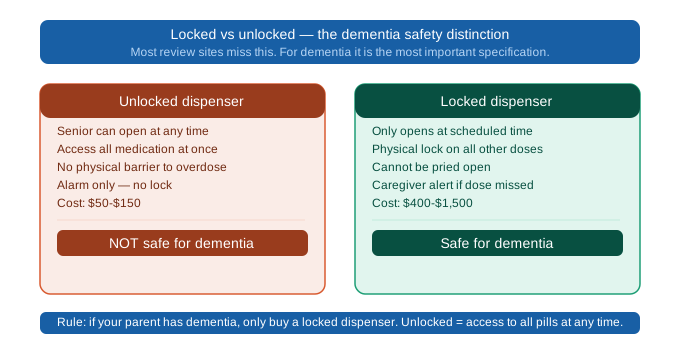
The Most Important Decision — Locked or Unlocked?
Before you compare prices, features, or brands, answer this question:
Does your parent have dementia, memory loss, or any tendency to take extra pills?
If yes: you need a locked dispenser. Full stop.
If no: an unlocked dispenser may be fine.
Here is why this matters more than any other feature:
An unlocked dispenser (Hero, TabTimer) dispenses pills into an open cup or tray. The pills sit there, accessible to your parent at any time. If your parent has dementia and takes extra pills — because they forgot they already took their dose, or because they associate the alarm with taking pills and take them again — an unlocked dispenser enables this. The dispenser did its job. Your parent’s medication management did not.
A locked dispenser (MedMinder Maya, Bliss Meds, Pivotell) only releases the pills at the scheduled time. Between doses, the pills are physically inaccessible. Your parent cannot take an extra dose whether they try or not.
This distinction is not a minor feature preference. For a senior with dementia or cognitive decline, it is a safety requirement.
Hero is the most frequently recommended automatic pill dispenser on every major review site. Hero is unlocked. If your parent has dementia, Hero is the wrong device for your parent regardless of how highly it is rated overall.
Hero — Best Smart Dispenser with Caregiver Alerts ($149 + $36.95/mo)
Hero is the best automatic pill dispenser for seniors who are forgetful but do not have dementia — and for remote caregivers who need daily confirmation that pills were taken.
When the scheduled dose time arrives, Hero sounds an alarm and dispenses the pills into a removable cup. If your parent does not take the pills within a set window, Hero sends you a text message. You can check your parent’s medication history in the app — which doses were taken, which were missed, when the dispenser needs refilling.
The subscription ($36.95/mo) buys: remote caregiver text and email alerts, cellular connectivity, the smartphone app, missed dose notifications, and refill reminders. Without the subscription, the dispenser does not function.
Device: $149–$179 (one-time)
Monthly: $36.95
Capacity: ~90 pills (restocked monthly-ish)
Connectivity: Wi-Fi required
Lock: Unlocked — pills accessible between doses
Power: AC power + 8-hour battery backup
Year 1 total: $592
Year 3 total: $1,479
Best for: Remote caregivers who need daily confirmation. Tech-comfortable families with reliable Wi-Fi. Seniors who are forgetful but not at risk of taking extra pills.
Honest limitations: Unlocked — dangerous for dementia. Requires Wi-Fi — does not work in homes with poor internet. Monthly fee is non-negotiable. If your parent’s Wi-Fi goes down, alerts stop.
MedMinder Maya — Best Locked Dispenser for Dementia ($0–$30 + $35–$49/mo)
MedMinder Maya is the best automatic pill dispenser for seniors with dementia, cognitive decline, or any history of taking extra medication.
The dispenser is a locked rotary device. At each scheduled time, it rotates to the correct compartment and unlocks that one slot — releasing the pills through a chute into a dispensing cup. The rest of the device remains locked. Your parent cannot access pills from any other compartment regardless of when they try.
MedMinder Maya also calls or texts caregivers — up to five contacts in priority order — when a dose is missed. The alarm sounds loudly and continuously until the pills are taken or a caregiver is reached. For a senior who ignores a quiet beep, this escalation matters.
Critically: MedMinder offers a cellular model that requires no Wi-Fi. For seniors in rural areas, in care facilities, or in homes where the internet is unreliable, cellular coverage is the only option that keeps alerts working regardless of internet status.
Device: $0–$30 (promotional)
Monthly: $35–$49 (cellular or Wi-Fi plan)
Capacity: 28 days (monthly refill — significant caregiver time saving)
Connectivity: Cellular (no Wi-Fi needed) or Wi-Fi
Lock: Locked — single compartment released per dose
Power: AC power + 48-hour battery backup (best in category)
Year 3 total: ~$1,290
Best for: Dementia and cognitive decline. Overdose prevention. Homes without reliable Wi-Fi (cellular plan). Caregivers who need locked control of medication access.
Honest limitations: Slightly higher complexity to set up initially. Monthly subscription is ongoing. Device requires periodic cleaning to ensure dispensing mechanism functions smoothly.
Bliss Meds — Best Budget Locked Dispenser ($69–$99, $0/mo)
Bliss Meds is the strongest option for caregivers who need locked dispensing without an ongoing monthly fee.
It is a locked, timer-based automatic dispenser. At each programmed time, it releases the correct dose into a cup. The remaining pills are locked. There are no remote alerts — if your parent misses a dose, you will not be notified via text or call. The dispenser alarms locally (audible beep) but does not escalate to a caregiver.
This is the right choice when: you visit regularly (daily or a few times a week) and can verify medication compliance in person, your parent does not have significant dementia but needs locked access to prevent over-medication, and you need the lowest possible ongoing cost.
Device: $69–$99 (one-time)
Monthly: $0 (no subscription)
Capacity: 7 days, 4 times per day
Lock: Locked
Power: AC power + battery backup
Year 3 total: $99
Best for: Budget-conscious caregivers. Seniors who need locked access but whose caregiver is nearby. Situations where remote alerts are not needed.
Honest limitation: No caregiver alerts. If your parent misses a dose, you will not know unless you check in person or by phone. Not suitable for remote caregivers who rely on notifications.
Pivotell — Best No-Subscription Locked Dispenser ($99–$149, $0/mo)
Pivotell is a UK-designed rotary locked dispenser with a persistent alarm. At each scheduled dose time, the dispenser rotates to the correct compartment, dispenses the pills, and sounds an alarm that repeats every few minutes until the pills are taken — rather than beeping once and going quiet.
The persistent alarm is the key differentiator. For seniors who might hear one beep and ignore it, Pivotell’s repeating alarm is more likely to prompt action.
No smartphone, no Wi-Fi, no subscription. The dispenser is programmed via a simple interface and operates mechanically.
Device: $99–$149 (one-time)
Monthly: $0
Capacity: 7 days
Lock: Locked
Power: Battery-operated (no AC required)
Year 3 total: $149
Best for: Seniors who need locked dispensing without smartphone dependency. Caregivers who want no ongoing cost. Seniors who respond better to persistent alarms than single beeps.
TabTimer — Best Simple Reminder ($29–$49, $0/mo)
TabTimer is not an automatic dispenser in the same category as Hero or MedMinder. It is a manual pill organiser with a programmable alarm. Your parent fills it, opens the correct compartment, and takes the pills. The alarm tells them when.
TabTimer is appropriate when your parent is cognitively intact and just needs a reminder — not controlled access, not caregiver alerts, not locked dispensing. For a senior with good memory who occasionally forgets whether they took a pill, TabTimer is a $40 solution that does not require a monthly subscription.
Device: $29–$49 (one-time)
Monthly: $0
Lock: Unlocked
Year 3 total: ~$40
Best for: Independent seniors with intact memory who need a reminder only. Lowest cost option for reminder-only needs. Not for dementia, not for overdose risk, not for remote caregiver scenarios.
MedMinder Janey — Best Portable Option ($0–$30 + $20–$30/mo)
MedMinder Janey is a pendant-style locked dispenser for seniors who spend time away from home. It is battery-powered and portable, not wall-plugged like most countertop dispensers. It holds 7 days of medication and sends caregiver alerts when doses are missed.
For an active senior who travels, visits family, or attends appointments regularly, and whose caregiver needs remote notification, Janey is the portable equivalent of MedMinder Maya.
Device: $0–$30
Monthly: $20–$30
Year 3 total: ~$750–$1,110
Livi Smart — Budget Alternative to Hero ($99–$149 + $29.95/mo)
Livi Smart is a Wi-Fi connected unlocked dispenser with caregiver alerts at a slightly lower monthly cost than Hero. The interface is similar, app control, text notifications on missed doses, medication history, at approximately $7/mo less than Hero.
The trade-offs compared to Hero: less established brand, smaller product ecosystem, and a comparable but slightly less polished app experience. For caregivers who want Hero’s functionality at a slightly lower cost and are comfortable with a newer brand, Livi is worth considering.
Device: $99–$149
Monthly: $29.95
Lock: Unlocked
Connectivity: Wi-Fi
Year 3 total: ~$1,028
Dementia and Automatic Pill Dispensers — The Right Device by Stage
This is the section no competitor provides — and the most important content in this guide.
Mild dementia (early stage — occasional confusion, generally functional)
Recommended: Hero (unlocked, smart alerts) or Bliss Meds (locked, no alerts)
Why: The senior is still compliant most of the time. The primary risk is forgetting a dose rather than double-dosing. If a caregiver needs remote confirmation, Hero works here. If double-dosing is beginning to be a concern, switch to a locked dispenser.
Moderate dementia (increasing confusion, episodes of not recognising medication)
Recommended: MedMinder Maya (locked, caregiver alerts, cellular)
Why: The locked design prevents double-dosing. The caregiver alert system means someone is notified if a dose is missed. The cellular option works regardless of Wi-Fi status, which matters as the senior’s home situation may be less predictable. This is the most important stage to act on — once dementia progresses to the point where the senior is actively trying to access extra medication, a locked dispenser prevents harm.
Advanced dementia (significant cognitive impairment, possible swallowing difficulties)
Recommended: MedMinder Maya managed entirely by caregiver, with caregiver present for doses
Why: At this stage, the dispenser is a tool for the caregiver, not for the senior. The senior is not managing their own medication in any meaningful sense. The dispenser organises and schedules; the caregiver administers. Consider whether medication format (pill vs liquid vs crushed) is still appropriate and consult with the senior’s physician about medication management options.
The True Cost — $40 One-Time vs $1,479 Over Three Years
This is the comparison no review site presents honestly.
| Device | Year 1 | Year 3 | Lock | Alerts |
|---|---|---|---|---|
| TabTimer | $40 | $40 | No | Local beep only |
| AM PM Pill Organiser | $10 | $10 | No | None |
| Bliss Meds | $99 | $99 | Yes | Local beep only |
| Pivotell | $149 | $149 | Yes | Local persistent beep |
| MedMinder Maya | ~$450 | ~$1,290 | Yes | Text/call caregiver |
| Hero | ~$592 | ~$1,479 | No | Text/email caregiver |
The $36.95/mo Hero subscription costs $443/year. Over three years, that is $1,330 in subscription fees alone, plus the device cost.
What does that $443/year buy? The certainty that you will receive a text message when your parent does not take their medication. Not a local beep your parent may ignore. A direct notification to your phone regardless of where you are.
For a remote caregiver — someone living more than 30 minutes from their parent — that certainty is worth $1.21/day. For a caregiver who lives five minutes away and checks in daily, it may not be.
The right answer depends on your situation, not on which device scores highest on a feature checklist.
Refill Reality — How Often Will You Actually Be Doing This?
“Automatic” suggests less work. The dispensing is automatic. The refilling is not.
7-day dispensers (TabTimer, Bliss Meds, Pivotell): 52 refills per year. At 10–15 minutes per refill, that is approximately 9–13 hours per year spent managing the dispenser. If you travel to your parent’s home to refill, factor in travel time.
28-day dispensers (MedMinder Maya): 13 refills per year. The same 10–15 minutes per refill, but only 13 times annually — approximately 2–3 hours per year. For caregivers who visit monthly, this aligns naturally with the visit cycle.
90-pill dispensers (Hero): Refill frequency varies by medication count and dose schedule. Typically monthly or more often for seniors with multiple daily medications.
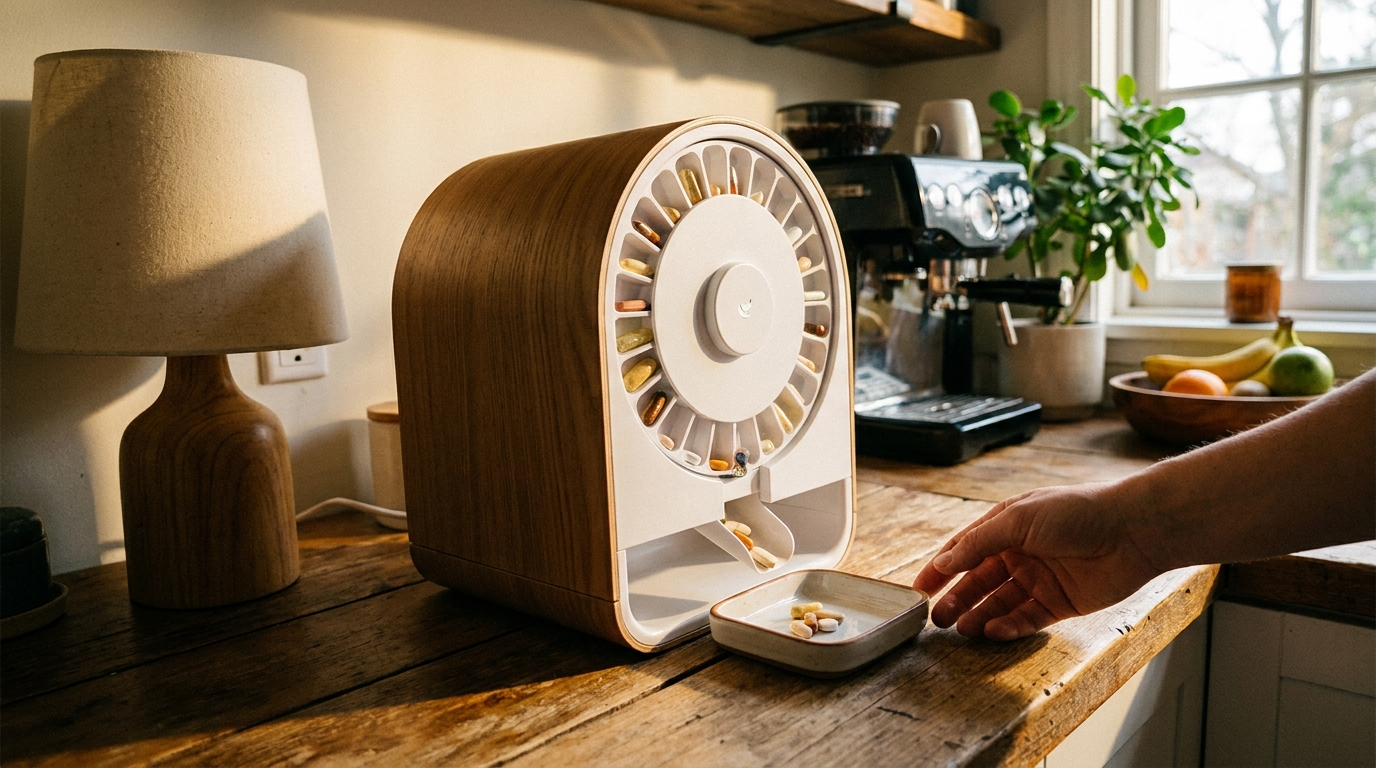
The refill cycle is the hidden operational cost of every automatic pill dispenser. It does not appear in any monthly pricing comparison — but it directly determines how much caregiver time the device requires beyond the subscription fee.
Does Medicare Cover Automatic Pill Dispensers?
This is one of the most searched questions in this category — and one of the least answered by competitors.
Durable Medical Equipment (DME): Automatic pill dispensers may qualify for coverage under Medicare Part B as DME, particularly if prescribed by a physician for management of a chronic condition. Medicare Part B covers 80% of approved DME costs after the deductible. Your parent would pay 20%. The device must be purchased from a Medicare-enrolled supplier.
Medicare Advantage: Some Medicare Advantage plans include medication management device benefits. The specific coverage varies significantly by plan. Call your parent’s Medicare Advantage member services line and ask: “Does my plan cover automatic medication dispensers or PERS medication management devices?” Ask specifically — these benefits are not always proactively communicated.
FSA and HSA: Automatic pill dispensers are generally eligible for FSA and HSA reimbursement as qualified medical expenses. If you or your parent has a flexible spending account or health savings account, use it for the device purchase.
Medicaid: Some state Medicaid programmes cover medication management devices under HCBS waivers for qualifying low-income seniors. Contact your state Medicaid office or local Area Agency on Aging for state-specific information.
Before paying full price for any automatic pill dispenser, make one phone call to your parent’s Medicare Advantage plan and confirm FSA/HSA eligibility. These two steps can significantly reduce or eliminate the out-of-pocket cost.
Frequently Asked Questions
Q: What is an automatic pill dispenser for seniors?
A: A device that stores medications and releases the correct dose at programmed times, sounding an alarm when it is time to take pills. More advanced models connect to apps and send caregiver alerts when doses are missed.
Q: What is the best automatic pill dispenser for seniors?
A: Depends on the situation. Best for remote caregivers who need alerts: Hero. Best for dementia and locked access: MedMinder Maya. Best budget locked option: Bliss Meds. Best simple reminder: TabTimer.
Q: What is the difference between a locked and unlocked pill dispenser?
A: An unlocked dispenser releases pills into an accessible cup — pills can be taken at any time. A locked dispenser only releases pills at the scheduled time and keeps all other compartments inaccessible. For seniors with dementia or overdose risk, locked is essential.
Q: Does an automatic pill dispenser need Wi-Fi?
A: Hero requires Wi-Fi. MedMinder Maya offers a cellular plan that works without Wi-Fi. Bliss Meds and Pivotell require no internet connection. For seniors in rural areas or with unreliable internet, MedMinder’s cellular plan or a non-connected device is the appropriate choice.
Q: How many days does an automatic pill dispenser hold?
A: TabTimer, Bliss Meds, Pivotell: 7 days. Hero: approximately 90 pills (varies by dose count). MedMinder Maya: 28 days. The 28-day capacity of MedMinder significantly reduces caregiver refill burden.
Q: Can an automatic pill dispenser help with dementia?
A: Yes — but only if it is locked. Unlocked dispensers (Hero, TabTimer) are not appropriate for seniors with dementia because pills remain accessible between doses. Locked dispensers (MedMinder Maya, Bliss Meds, Pivotell) dispense one dose at a time and prevent access to remaining pills.
Q: Is the Hero pill dispenser worth the monthly fee?
A: For remote caregivers who want daily confirmation that pills were taken: yes. The $36.95/mo subscription provides text and email alerts, medication history in the app, and missed dose notifications. For caregivers who live nearby and check in regularly: the monthly fee may not be justified.
Q: What happens if the power goes out?
A: Hero has 8 hours of battery backup. MedMinder Maya has 48 hours — the best battery backup in the category. Pivotell is battery-operated and unaffected by power outages. Confirm backup duration with your provider.
Q: My mum has dementia and keeps taking extra pills — which automatic pill dispenser prevents that?
A: MedMinder Maya. It is a locked dispenser that only releases one compartment at a time. Between doses, all pills are physically inaccessible. When the dose time arrives, the correct compartment opens and dispenses the pills. Your parent cannot access extra pills regardless of whether they try. Hero, by contrast, is unlocked — it dispenses pills into an open cup that remains accessible at all times, which is not safe for dementia.
Q: What is the total cost of a Hero vs MedMinder over 2 years?
A: Hero: $149 device + ($36.95 × 24 months) = $149 + $886.80 = $1,035.80. MedMinder Maya: $30 device + ($42/mo average × 24 months) = $30 + $1,008 = $1,038. After 2 years, the costs are nearly identical. Over 3 years, MedMinder ($1,290) costs approximately $189 less than Hero ($1,479). The difference is the features: MedMinder is locked, Hero is not.
Q: Which automatic pill dispenser works without Wi-Fi or a smartphone?
A: MedMinder Maya (cellular plan — no Wi-Fi needed, alerts to caregiver phone). Bliss Meds (no internet, no alerts, timer-based). Pivotell (fully mechanical, no internet, no alerts). For rural caregivers or seniors with poor internet: MedMinder’s cellular plan is the only option that provides caregiver alerts without requiring Wi-Fi.
Q: How often do I need to refill the dispenser?
A: 7-day dispensers (TabTimer, Bliss Meds, Pivotell): 52 times per year. Hero (~90 pills): approximately monthly but varies by medication count. MedMinder Maya: 13 times per year (monthly). The 28-day capacity of MedMinder represents approximately 39 fewer refills per year than a weekly dispenser — significant for caregivers managing time.
Q: My parent doesn’t take the pills when the alarm goes off — which dispenser will notify ME?
A: Hero and MedMinder Maya both notify caregivers when a dose is missed. Hero sends a text/email to the caregiver app. MedMinder calls and texts up to five contacts in priority order and escalates if the primary contact does not respond. MedMinder’s escalation system is more persistent — if you do not respond to the first call, it tries the next contact on the list.
Q: Can an automatic pill dispenser handle multiple medications at different times of day?
A: Yes. Most automatic dispensers allow multiple dose times per day — typically 4 per day (morning, noon, afternoon, evening). Each compartment can contain multiple pills for that dose time. Hero, MedMinder Maya, Bliss Meds, and Pivotell all support multiple daily dose times. For very complex regimens (6+ dose times or medications requiring different intervals), confirm your specific schedule with the manufacturer.
Q: What happens if my dad misses a dose — does the monitoring centre call me?
A: Hero sends a text/email to your smartphone when a dose is missed — no phone call. MedMinder Maya calls you (actual phone call) and sends a text. If you do not respond, MedMinder calls the next contact on your preset list. This escalation system is the key reason MedMinder is the recommended choice for high-risk seniors where a missed dose is a genuine medical concern.
Our Final Recommendation
For most remote caregivers with a forgetful but cognitively intact parent: Hero is the right automatic pill dispenser. Daily confirmation via text, medication history in the app, and easy remote management. Hero Health
For any parent with dementia, cognitive decline, or any overdose risk: MedMinder Maya is the only appropriate choice. Locked dispensing prevents extra doses. Cellular connectivity works without Wi-Fi. Caregiver call escalation is the strongest missed-dose alert system in the category. MedMinder Maya
For budget-conscious caregivers who need locked dispensing without a subscription: Bliss Meds at $99 one-time is the right choice. Bliss Meds
For caregivers who want no subscription and a persistent local alarm: Pivotell at $149 one-time. Pivotell
For independent seniors who just need a reminder: TabTimer at $40 is sufficient and costs nothing ongoing. TabTimer
Before purchasing: call your parent’s Medicare Advantage plan and ask about medication management device coverage. Check FSA/HSA eligibility. The right device costs less than you think if you use the coverage available to you.
Comparing all your options? Our guide to the best pill dispenser for seniors matches four devices to four specific parent situations.
The Hero Health website provides full technical specifications and subscription pricing for the Hero automatic dispenser.
If your priority is an audible local alarm at the dispenser itself, see our guide to automatic pill dispensers with alarm for elderly — covering both local and escalation alarm options.