There is no such thing as free Life Alert systems. Not through Medicare. Not through a promotion. Not through any government programme.
If you have seen an advertisement suggesting you can get Life Alert at no cost, that advertisement is misleading. Life Alert’s plans start at $69.95 per month and require a 36-month contract with a $197 activation fee. No version of that is free.
However, that does not mean medical alert protection is out of reach for seniors on a fixed income or families who cannot afford a private subscription. There are legitimate programmes that can cover the cost of a medical alert system — just not Life Alert specifically, and not for everyone.
This guide explains exactly what is available, who qualifies, and what the most affordable paid alternatives look like for those who do not qualify for assistance.
The Short Answer — Life Alert Is Never Free
Let us address the misconception directly before going further.
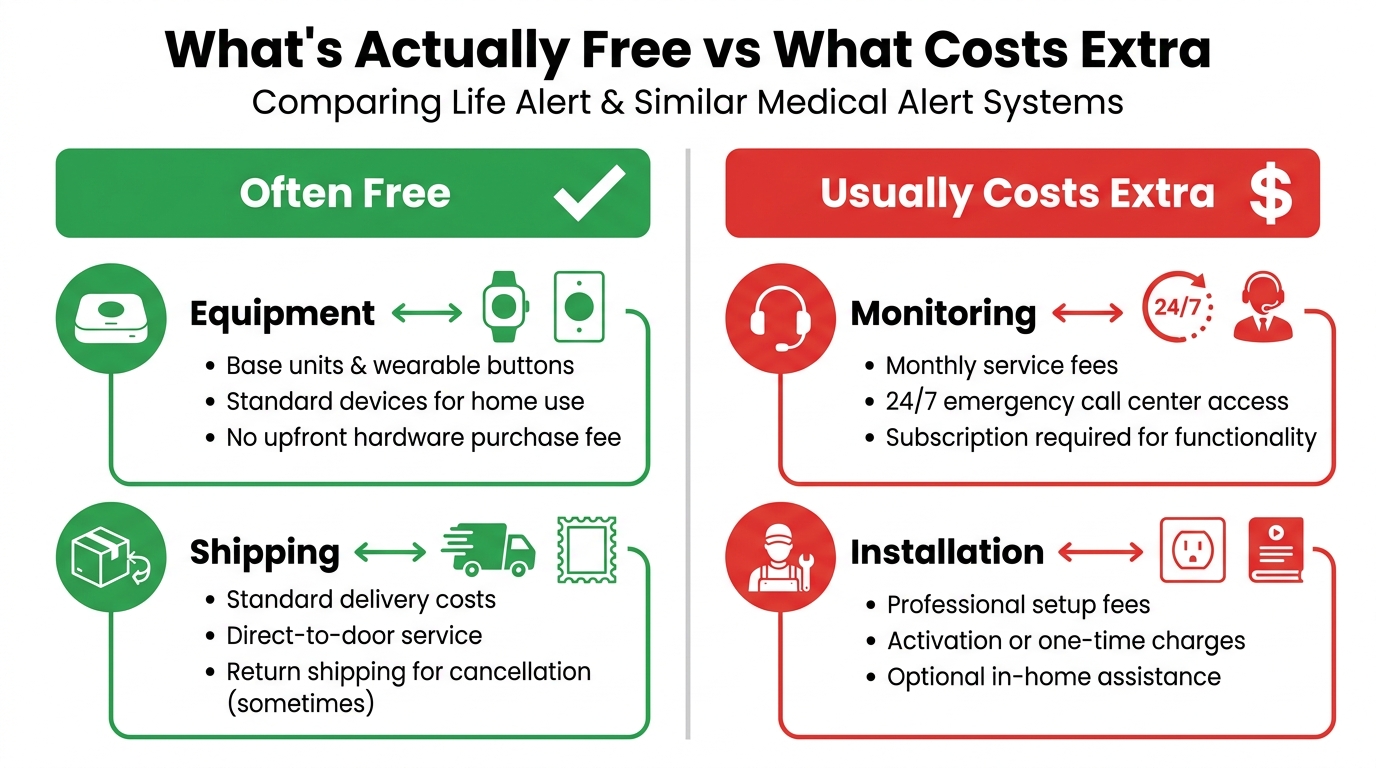
Some companies advertise “free medical alert devices” — meaning they waive the equipment cost but still charge a monthly monitoring fee of $25 to $35. The device is free. The ongoing service is not.
Some companies offer a free first month — again, as a promotional offer on a paid subscription. After the free month, standard monthly fees apply.
Life Alert does not offer either of these. There is no free device, no free trial period, and no promotional pricing. The company has not historically discounted its service or offered introductory deals.
When people search for free Life Alert systems, what they are usually looking for is free medical alert coverage through a government programme. That does exist — but it applies to personal emergency response systems generally, not Life Alert specifically.
Free Life Alert Systems: Programmes That Can Cover Medical Alert Costs
Several legitimate programmes can help seniors access a medical alert system at reduced or zero cost. Eligibility varies by state, income, and medical need.
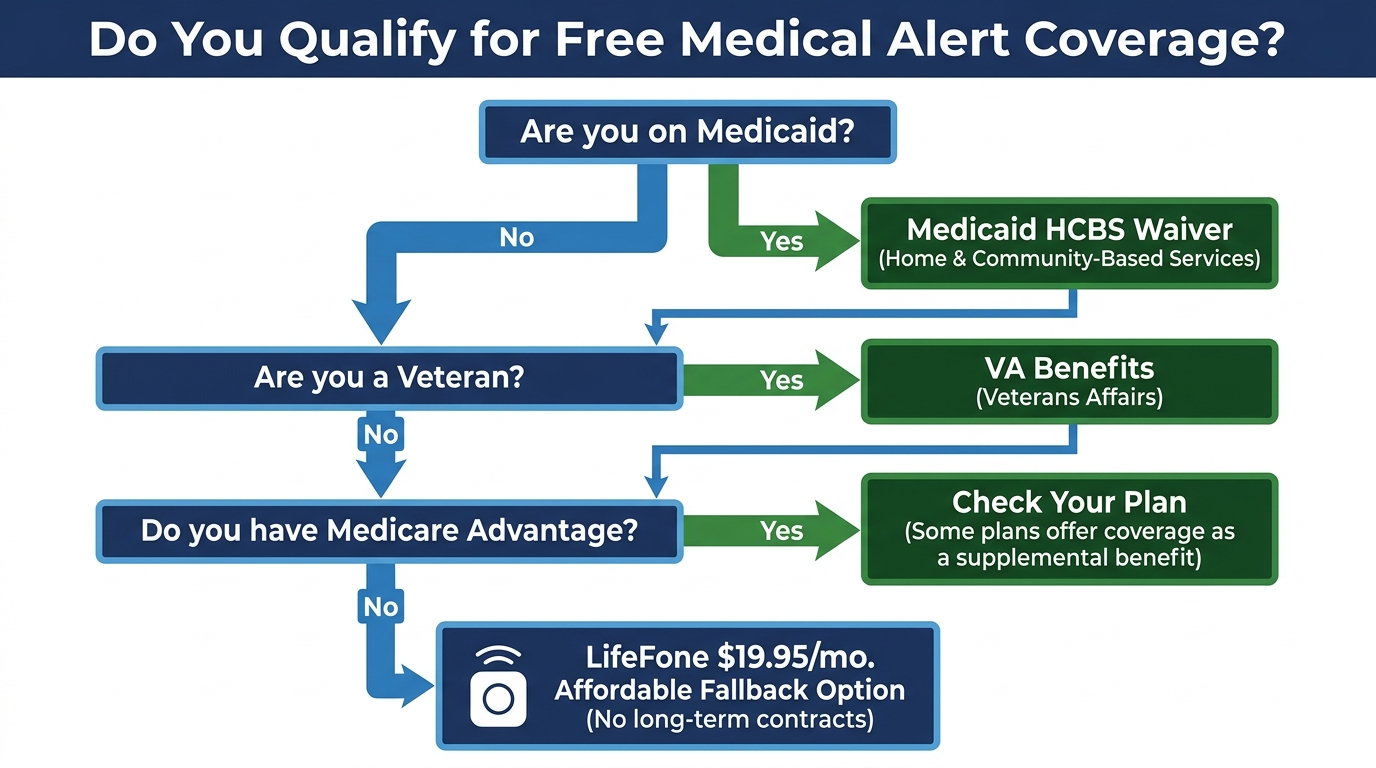
Medicaid Home and Community-Based Services Waivers
This is the most reliable route for seniors who qualify. Medicaid’s HCBS waivers fund services that help eligible seniors remain in their homes rather than moving to institutional care. Personal emergency response systems — the category that includes medical alert devices — are covered under these waivers in many states.
Each state administers its own waiver programme with different eligibility criteria, approved providers, and coverage levels. States with confirmed PERS coverage under Medicaid waivers include Florida through the Statewide Medicaid Managed Care programme, Illinois through the Department on Aging, Pennsylvania through the Aging Waiver programme, and Ohio through the PASSPORT programme.
To find out whether your state covers PERS and whether you qualify, contact your state’s Medicaid office directly or call the Eldercare Locator at 1-800-677-1116. This free national service connects you with your local Area Agency on Aging, which can advise on available programmes and help you navigate the application process.
Veterans Benefits
Veterans who receive care through the Department of Veterans Affairs may be eligible for assistive technology and home safety equipment, which can include personal emergency response systems. Coverage depends on your VA healthcare enrolment status and the medical determination of need.
To explore VA coverage, contact your local VA medical centre or visit va.gov and navigate to the benefits section. A VA social worker can help assess eligibility and identify which programmes apply to your situation.
Medicare — What Changed in 2024
Original Medicare — Part A and Part B — has never covered personal emergency response systems. Medical alert devices are not classified as durable medical equipment under Medicare’s definitions, and this has not changed.
Medicare Advantage plans (Part C) previously offered limited PERS benefits as a supplemental coverage option. However, several major Medicare Advantage providers discontinued this benefit in 2024. United Healthcare’s AARP Medicare Advantage plans discontinued free PERS coverage during that period.
If you have a Medicare Advantage plan, call the member services number on your insurance card and ask specifically whether personal emergency response systems are covered as a supplemental benefit. The answer varies significantly by plan, insurer, and region, and the coverage landscape shifted in 2024. Do not assume coverage without confirming directly.
PACE — Programme of All-Inclusive Care for the Elderly
PACE is a combined Medicare and Medicaid programme for seniors who need nursing-home-level care but choose to remain in the community. PACE covers a comprehensive range of services and may include personal emergency response systems as part of an individual care plan. Eligibility requires being 55 or older, living in a PACE service area, and qualifying for nursing-home-level care under your state’s standards.
Area Agency on Aging — Local Assistance
Every region of the United States has a local Area Agency on Aging funded by the Older Americans Act. These agencies administer local programmes for seniors that vary by location. Some AAA programmes include assistance with personal emergency response systems, home modifications, or both. Access and availability depend entirely on your county or region.
To find your local AAA, call the Eldercare Locator at 1-800-677-1116 or dial 211 from any phone. The 211 service is a free community resource hotline that can connect you with local assistance programmes including senior safety support.
How to Apply for a Free Medical Alert Through Medicaid
If you believe you may qualify for HCBS waiver coverage, here are the steps to follow.
First, check your state’s Medicaid waiver programme. Visit your state’s Medicaid website and search for Home and Community-Based Services waivers or PERS coverage. Not all states cover personal emergency response systems under their waivers, and eligibility criteria differ.
Second, obtain a letter of medical necessity from your doctor. Most Medicaid programmes require documentation that the medical alert system is medically necessary for your safety at home. A physician or occupational therapist can provide this letter based on fall history, medical conditions, or documented safety concerns.
Third, contact your local Area Agency on Aging. The AAA serves as a practical guide through the local system. They can identify which programmes you qualify for, help with paperwork, and connect you with approved PERS providers that accept Medicaid reimbursement.
Approval timelines vary by state and programme. Some HCBS waivers have waiting lists. The process typically takes several weeks to several months from initial enquiry to device installation.
What Free Medical Alert Offers Actually Mean
When you see a company advertising a free medical alert system, here is what that usually means in practice.
Free device with paid monitoring means the company waives the equipment cost — which is typically $50 to $150 — but charges a monthly monitoring fee of $25 to $35 per month. Over two years, that is still $600 to $840. The device is free. The service is not.
Free first month is a promotional offer that gives you the first month of monitoring at no charge. Standard rates apply from month two onwards. This is genuinely useful for testing a system before committing, but it is not a free system.
Free lockbox and shipping are add-on perks offered by some providers on annual billing plans. LifeFone, for example, includes a free lockbox — a small key safe mounted near your front door that allows emergency responders to enter without breaking the door — and free shipping on annual plans. These are valuable additions but again, the monitoring service itself is not free.
If You Do Not Qualify — The Most Affordable Paid Options
For seniors who do not qualify for government assistance but cannot afford $69.95 per month, there are significantly more affordable private options than Life Alert.
LifeFone is the most affordable fully monitored medical alert system available in 2026. Plans start at $24.95 per month on an annual plan ($29.95/mo month-to-month) — the lowest ongoing cost of any monitored option in this category. There is no activation fee, no equipment fee, no contract, and a 30-day money-back guarantee. A free lockbox and free shipping are included on annual plans. Fall detection is available as a $5/mo add-on. See current plans at LifeFone.

Bay Alarm Medical starts at $27.95 per month with no contract and no activation fee. Fall detection is available at $10 per month extra.
For context on how Life Alert’s price compares to these options, see our Life Alert cost guide and our Life Alert alternatives comparison.
For options with no monthly monitoring fee, see our no monthly fee medical alert systems guide, and for AARP-specific options see our AARP medical alert systems guide.
Frequently Asked Questions
Can you get a Life Alert system for free?
No. Life Alert does not offer free plans, free trials, or promotional pricing. Their plans start at $69.95 per month and require a 36-month contract with a $197 activation fee. No government programme covers Life Alert specifically.
Does Medicaid cover Life Alert systems?
Medicaid does not cover Life Alert directly, but Medicaid HCBS waivers cover personal emergency response systems — the general category — in many states. You would receive a Medicaid-approved PERS device, not a Life Alert device specifically. Contact your state’s Medicaid office to check eligibility.
Does Medicare pay for Life Alert?
No. Original Medicare (Part A and B) does not cover Life Alert or any personal emergency response system. Some Medicare Advantage plans previously offered PERS coverage but many discontinued this benefit in 2024. Check with your specific Medicare Advantage plan directly.
How do veterans get a free medical alert system?
Veterans enrolled in VA healthcare may be eligible for assistive technology including personal emergency response systems, subject to a determination of medical need. Contact your local VA medical centre or visit va.gov to explore options.
What is the cheapest medical alert system for seniors on a fixed income?
LifeFone from $24.95 per month on an annual plan is the most affordable fully monitored option available in 2026. There is no activation fee, no contract, and a 30-day money-back guarantee.
What is the Area Agency on Aging and how can it help?
The Area Agency on Aging is a federally funded local organisation that connects seniors with community services including home safety support. Call the Eldercare Locator at 1-800-677-1116 or dial 211 to find your local AAA and enquire about available assistance programmes.
What to Do Next
If you believe you may qualify for government assistance, call the Eldercare Locator at 1-800-677-1116. They can connect you with your local Area Agency on Aging, who will advise on Medicaid waiver eligibility and other local programmes.
If you need protection now and government assistance is not available, LifeFone is the most affordable monitored option, from $24.95 per month on an annual plan with no contract.
If you have been told Life Alert is the only option, that is not accurate. Equivalent protection is available from multiple providers at significantly lower cost. Our Life Alert alternatives guide covers the best options in detail.
—
This article was researched and written by the SafeElderCare editorial team. Programme information reflects publicly available data as of June 2026. Eligibility for government assistance varies by state and individual circumstance — contact your state’s Medicaid office or local AAA for personalised guidance. Affiliate links are marked.