Her brother wanted to get their father an Apple Watch.
She wanted a dedicated medical alert wristband. Their father wanted neither.
They spent three weeks comparing specs, reading reviews, and arguing about monthly fees — without ever resolving the one question underneath all of it: which of these devices would their father actually wear every day, and which one would end up in a drawer by the end of the month?
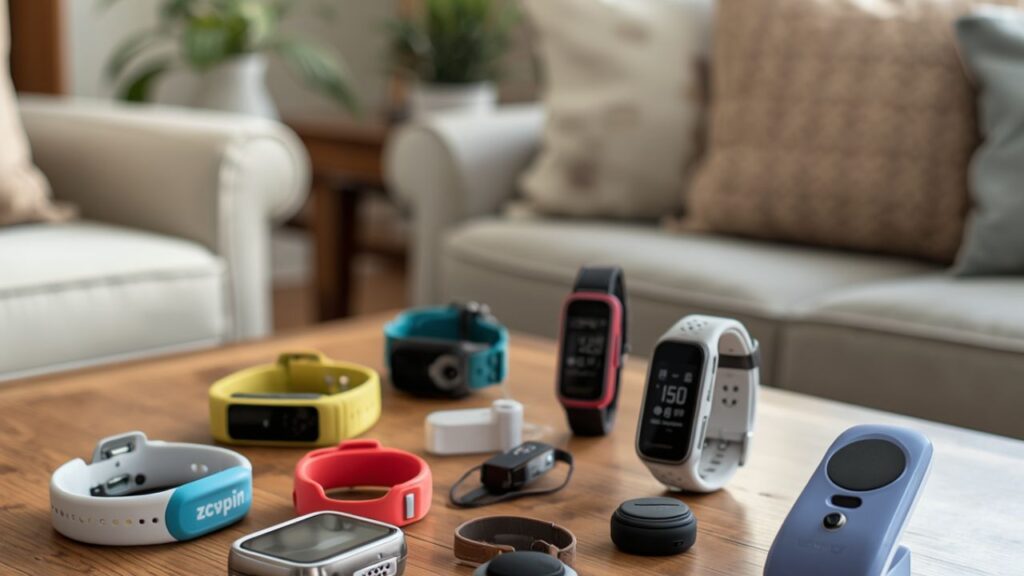
Wearable medical alert devices sit at the intersection of consumer technology and personal safety — and the category is more crowded and more confusing than it has ever been. Apple Watches with fall detection. Dedicated medical alert smartwatches. Pendant necklaces. GPS wristbands. Every option has a different monthly cost, a different form factor, and a different answer to the question of what actually happens when something goes wrong.
This guide cuts through all of it. It covers the three types of wearable medical alert devices, fall detection accuracy data that no competitor publishes in one place, and the five best devices in 2026 — matched to the seniors who will actually wear them.
Three Types of Wearable Medical Alert Devices for Seniors
Not all wearable medical alert devices are the same product. Before comparing brands and monthly fees, understand the three distinct categories — because they serve different populations of seniors and different caregiver needs.
Type 1 — Pendant Wearable Medical Alert Devices
A pendant hangs around the neck on a cord or lanyard. It is the most recognised form factor in the wearable medical alert devices category — the classic “button you press in an emergency.”
Pendants are the easiest to reach in a fall. They hang at chest level, accessible with one hand even lying on the floor. They require no correct positioning to work — unlike a wristband, which must be on the wrist.
Best for: Seniors who are comfortable wearing medical alert necklaces and need reliable button access at all times. Not for: Seniors who find cords uncomfortable, use walkers with rails that could catch a cord, or have dementia and may remove or mouth the pendant.
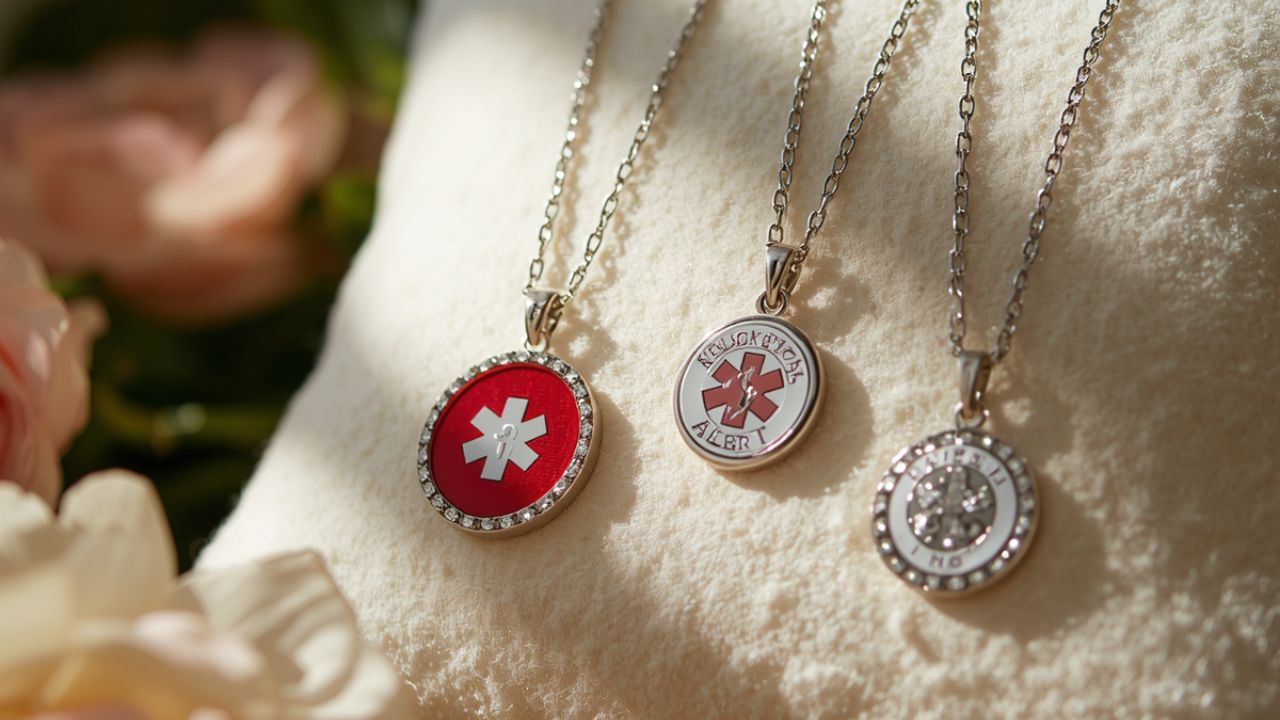
Type 2 — Wristband Wearable Medical Alert Devices
A wristband is worn on the wrist like a watch. It is more discreet than a pendant — many wristband wearable medical alert devices are indistinguishable from a standard sports band at a distance.
Wristbands eliminate cord risk entirely. For seniors who use walkers, rollators, or bed rails where a pendant cord can catch, a wristband is the safer form factor.
Best for: Seniors who resist pendant cords. Seniors who use mobility aids. Active seniors who want a more discreet device. Not for: Seniors with severe arthritis or wrist sensitivity who find wristbands uncomfortable. Seniors who may remove wristbands as habitually as pendants.
Type 3 — Smartwatch Wearable Medical Alert Devices
A smartwatch has a screen, displays the time, and may include health monitoring features alongside the emergency response function. It looks like a consumer device — which is the primary reason tech-savvy and appearance-conscious seniors accept it more readily than a clinical pendant.
Wearable medical alert devices in smartwatch format come in two distinct types: dedicated medical alert smartwatches (Medical Guardian MGMove) with 24/7 professional monitoring, and consumer smartwatches (Apple Watch) with fall detection but no professional monitoring centre.
The distinction matters enormously — and is covered in detail in the next section.
Best for: Tech-savvy seniors who want familiar consumer-device aesthetics. Seniors who have refused every pendant and wristband. Not for: Seniors who want simplicity over features. Seniors who struggle with touchscreens. Seniors who will not charge a device daily.
Apple Watch vs Dedicated Wearable Medical Alert Devices — The Question Every Caregiver Asks
This is the comparison that drives more caregiver confusion than any other in the wearable medical alert devices category. The honest answer is nuanced — and depends entirely on your parent’s situation.
What Apple Watch does well
Apple Watch detects falls automatically. When fall detection triggers and the senior does not respond within 10 seconds, it calls 911 and sends a location text to emergency contacts. Family Setup allows a caregiver to configure and manage the watch from their own iPhone without the senior needing a phone. GPS location is visible through Find My at any time.
Over three years, Apple Watch costs approximately $609–$689 — significantly less than dedicated wearable medical alert devices with professional monitoring.
What Apple Watch does not do
Apple Watch calls 911. It does not connect to a professional monitoring centre. There is no operator who speaks with your parent, assesses the situation, and contacts you before dispatching help. Emergency services are dispatched automatically — you are notified at the same time, not consulted first.
Apple Watch requires an iPhone — either your parent’s or a paired caregiver device via Family Setup. It requires nightly charging. It has no geofencing alerts that notify caregivers automatically when a parent leaves home. Fall detection accuracy is approximately 70% per independent testing.
When to choose Apple Watch
Active, cognitively intact seniors already in an iPhone household. Lower-risk seniors who need fall detection at the lowest three-year cost. Seniors who refuse every dedicated medical alert device but will accept an Apple Watch.
When to choose dedicated wearable medical alert devices
High-risk seniors, seniors with dementia, and any senior living alone without guaranteed family availability. Seniors who need a monitoring centre operator to manage emergency response. Seniors who need geofencing alerts. Any situation where 911 auto-dispatch without a monitoring centre operator is insufficient.
Fall Detection Accuracy in Wearable Medical Alert Devices — The Data Nobody Publishes Together
Fall detection accuracy is the specification that most directly determines whether wearable medical alert devices protect your parent in the moment that matters most — and no competitor guide compares it across devices in one place.
Here is the current accuracy data across the main wearable medical alert devices with fall detection:
Medical Guardian (MGMove, Mobile): ~90% fall detection accuracy in independent testing. The highest accuracy rating in the dedicated medical alert category.
Bay Alarm Medical SOS All-in-One 2: ~75% fall detection accuracy. Strong performance for the price point — and the cellular connectivity means alerts reach the monitoring centre without Wi-Fi dependency.
Apple Watch: ~70% fall detection accuracy per independent assessments. The lowest accuracy of the three — though Apple’s algorithm continues to improve with each watchOS update.
What the numbers mean practically: a 90% detection rate means approximately 1 in 10 genuine falls is not automatically detected. A 70% detection rate means approximately 3 in 10 falls are not detected. For a senior who falls and cannot press the button — due to unconsciousness, confusion, or arm injury — the accuracy gap between 90% and 70% is not a marginal difference.
False alarm rates across wearable medical alert devices run approximately 15–25% — triggered by vigorous movement, bending sharply, or sitting down quickly. False alarms in monitored devices are consequence-free: the monitoring centre operator asks if everything is okay, the senior confirms, and the call ends in under a minute. For a detailed breakdown of accuracy rates across all providers, see our complete guide to medical alert systems with fall detection.
Which Wearable Medical Alert Device Will Your Parent Actually Keep On?
The most accurate fall detection in the world does not protect a senior whose device is on the nightstand. Wearing compliance is the practical specification that all the technical data cannot replace.
Pendants: Familiar to seniors who already wear necklaces. Easy to put on and remove. The cord can be a resistance point — particularly for seniors who associate medical pendants with loss of independence. Bay Alarm Medical’s Bella Charms add-on addresses the appearance barrier directly.
Wristbands: More discreet than pendants at conversational distance. Bay Alarm Medical SOS All-in-One 2 with Bella Bands is the most stylish wristband wearable medical alert device in the category. Comfortable for all-day wear for most seniors. Some seniors remove wristbands as reflexively as pendants — habitual jewellery removal requires a different strategy.
Smartwatches: The highest acceptance rate among tech-savvy and appearance-conscious seniors, particularly those who already wear a watch. Medical Guardian MGMove is the strongest dedicated medical alert smartwatch for this population. Apple Watch has the highest recognition and acceptance among seniors who already use Apple products.
The practical approach: present two or three options and let your parent choose between them rather than presenting one device as the only choice. Autonomy in the selection significantly increases wearing compliance.
Bay Alarm Medical SOS All-in-One 2 — Best Overall Wearable Medical Alert Device
Bay Alarm Medical SOS All-in-One 2 is the best overall wearable medical alert device for seniors — combining GPS coverage, wristband and lanyard wearing options, professional monitoring, and the Bella Bands stylish accessory in one device.
The dual wearing format is the SOS All-in-One 2’s defining practical advantage: worn as a wristband for seniors who prefer wrist wear, or switched to a lanyard pendant for seniors who prefer necklace wear, without requiring a different device for each preference. One purchase covers both wearing styles.
The Bella Bands interchangeable wristband option transforms the device aesthetically — available in multiple styles that do not announce the device as a medical alert. For seniors who resist wearing anything that looks clinical, Bella Bands is the most practical solution available in the wristband wearable medical alert devices category.
The device operates via cellular — no home Wi-Fi required, no base station. Coverage works indoors, outdoors, and away from home entirely.
Monthly: $34.95 Device: Included GPS: Yes — cellular Fall detection: Yes — ~75% accuracy Form factor: Wristband or lanyard Waterproof: IP67 Contract: Month-to-month Year 3 total: ~$1,258
Best for: Seniors who want the flexibility of both wristband and pendant wear. Caregivers who want GPS with professional monitoring below Medical Guardian pricing. Seniors who resist medical-looking devices — Bella Bands addresses this directly.
Medical Guardian MGMove — Best Smartwatch Wearable Medical Alert Device
Medical Guardian MGMove is the best smartwatch-format wearable medical alert device — a dedicated medical alert in a touchscreen watch design, combining GPS, automatic fall detection, and direct professional monitoring centre connection in a device that looks like a consumer smartwatch.
The MGMove’s touchscreen displays the time, device status, and battery level — it functions as a watch, not just an emergency button. Two-way voice communication works through the watch speaker. The emergency button is integrated into the watch face.
Medical Guardian’s monitoring centres are CSAA Five Diamond certified — the highest industry standard — with an 8-second average response time per The Senior List’s 2026 testing. Fall detection accuracy at approximately 90% is the highest in the wearable medical alert devices category.
For seniors who have rejected every pendant and wristband option: the MGMove changes the conversation. It is not a medical alert device in the traditional sense — it is a smartwatch that happens to connect to a professional monitoring centre.
Monthly: $39.95–$49.95 Device: Included GPS: Yes — built in Fall detection: Yes — ~90% accuracy Screen: Yes — touchscreen Response time: 8 seconds Waterproof: IP67 Contract: Month-to-month Year 3 total: ~$1,438–$1,798
Best for: Seniors who have refused every pendant and wristband. Tech-savvy seniors who want smartwatch aesthetics with professional monitoring. High-risk seniors where fall detection accuracy is the priority.
Apple Watch — A Cheaper Consumer Alternative
Apple Watch is a practical, lower-cost alternative for active, cognitively intact seniors in iPhone households, at roughly $609–$689 over three years, but it calls 911 directly with no professional monitoring centre, which makes it unsuitable for high-risk seniors or anyone with dementia. For the best smartwatch options specifically, see our full guide.
LifeFone — Best Value Pendant Wearable Medical Alert Device
LifeFone is the best value pendant wearable medical alert device — a 4.7-star rated provider with a breakaway cord as standard, 7-day battery life, and the lowest monthly rate in this guide.
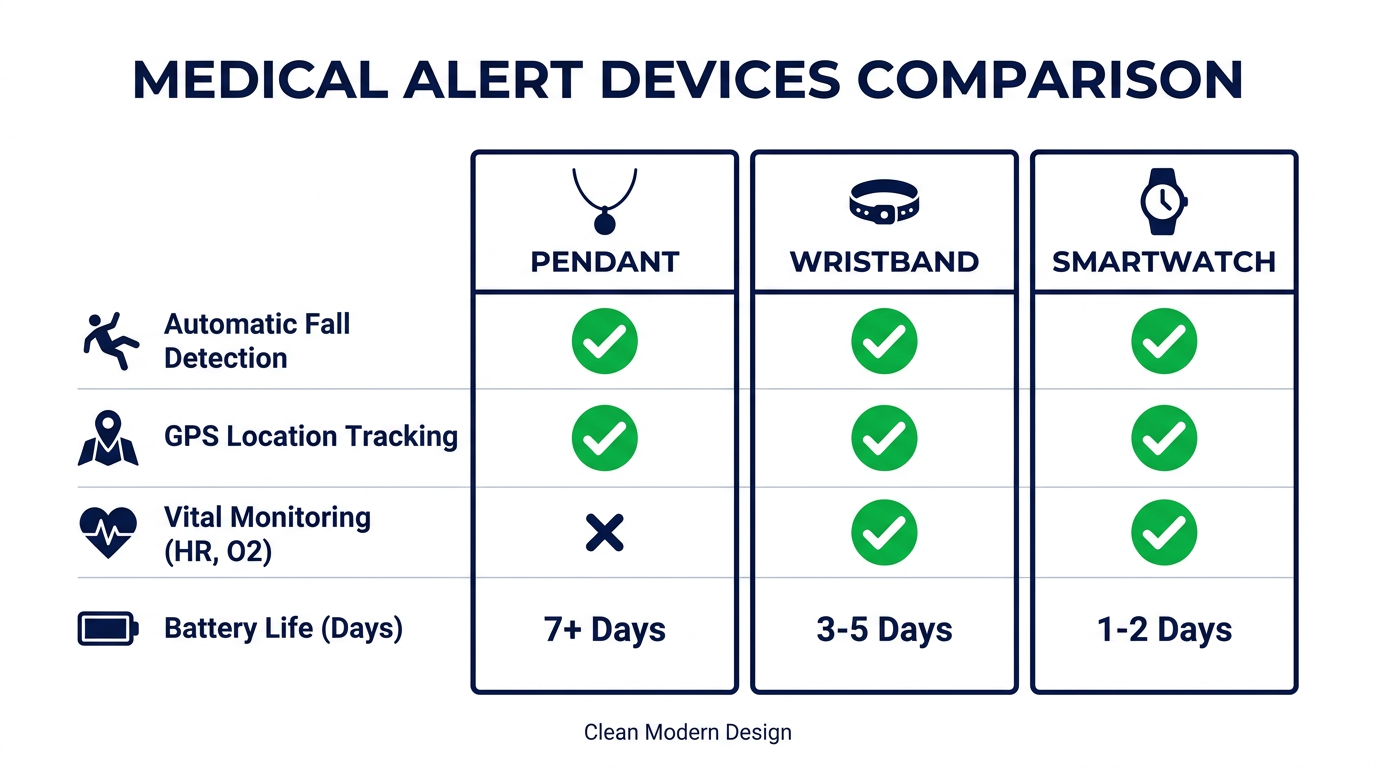
The 7-day battery is a practical differentiator for wearing compliance. A pendant that needs charging once a week is far more likely to be worn consistently than one requiring daily charging. A device that runs flat on the nightstand charger protects nobody.
The breakaway cord releases under tension — essential for seniors using walkers, rollators, or bed rails. LifeFone includes this as standard across all pendant plans without additional cost.
Monthly: $24.95–$29.95 Device: Included GPS: Yes — higher-tier plan Fall detection: $5/mo add-on Cord: Breakaway — standard Battery: 7+ days Waterproof: IP67 Contract: Month-to-month Year 3 total: ~$898–$1,078
Best for: Caregivers who prioritise verified customer ratings. Seniors who use walkers or bed rails needing a breakaway cord. Long battery life needed to reduce daily charging friction.
MobileHelp Classic — Most Affordable Wearable Medical Alert Device
MobileHelp Classic is the most affordable monitored pendant wearable medical alert device with free equipment — $25.95/mo, no device fee, no activation fee, no long-term contract.
The 1,400 ft in-home range is the widest of any device in this guide — covering two-storey homes and properties with outdoor areas. For seniors who primarily stay at home, MobileHelp delivers professional monitoring at the lowest ongoing cost with the widest in-home coverage.
Monthly: $25.95 Device: Free GPS: No — in-home only Fall detection: Add-on available Waterproof: IP67 Contract: Month-to-month Year 3 total: ~$934
Best for: Seniors who stay at home. Budget-conscious caregivers who need professional monitoring at the lowest monthly cost. Large homes where in-home range is the priority specification.
Not for: Active seniors who leave home — no GPS means no outdoor coverage.
3-Year Cost Comparison — Wearable Medical Alert Devices
| Device | Monthly | Device Fee | Year 3 Total | GPS | Fall Detection Accuracy | Monitoring |
|---|---|---|---|---|---|---|
| Apple Watch | ~$10 | $399 | ~$609–$689 | Yes | ~70% | 911 only |
| LifeFone | $24.95–$29.95 | $0 | ~$898–$1,078 | Yes (higher plan) | N/A | Professional |
| MobileHelp Classic | $25.95 | $0 | ~$934 | No | Add-on | Professional |
| Bay Alarm SOS All-in-One 2 | $34.95 | $0 | ~$1,258 | Yes | ~75% | Professional |
| Medical Guardian MGMove | $39.95–$49.95 | $0 | ~$1,438–$1,798 | Yes | ~90% | Professional |
What If My Parent Refuses to Wear Any Device?
Some seniors refuse every wearable medical alert device regardless of form factor, aesthetics, or how the conversation is framed. This is a real situation — and it has practical alternatives.
Voice-activated base stations: Devices like Amazon Alexa with emergency calling enabled allow a senior to call for help by voice without wearing anything. Coverage is room-by-room based on where the device is placed.
Wall-mounted emergency buttons: Fixed to the wall in high-risk locations — inside the shower cubicle, beside the toilet, next to the bed — and require no wearing at all. Bay Alarm Medical, Medical Guardian, and LifeFone all offer compatible wall buttons as add-on accessories.
Floor sensors: Pressure-sensitive mats placed beside the bed detect when a senior does not get up within a normal window and send a caregiver alert. Appropriate for seniors with significant dementia who will not accept any wearable.
Passive monitoring systems: Motion sensor networks that detect unusual inactivity patterns and alert caregivers without requiring the senior to wear anything or press any button.
These alternatives are less responsive than wearable medical alert devices in a fall scenario — a wall button helps only if the senior can reach it, and passive monitoring alerts on inactivity rather than an active emergency. But for a senior who will not wear a device under any circumstances, a wall button in the bathroom is significantly better than nothing.
Frequently Asked Questions
What is the best wearable medical alert device for seniors? Bay Alarm Medical SOS All-in-One 2 for the best overall wearable — GPS, dual pendant and wristband format, Bella Bands styling, professional monitoring. Medical Guardian MGMove for seniors who need a smartwatch format. LifeFone for the best value pendant. The best wearable medical alert device depends on form factor preference and whether professional monitoring is required.
Is Apple Watch a medical alert device? Apple Watch is a consumer smartwatch with fall detection — not a dedicated medical alert device. It calls 911 when fall detection triggers but does not connect to a professional monitoring centre. For lower-risk, tech-savvy seniors in iPhone households it is a practical alternative. For high-risk seniors or dementia, dedicated wearable medical alert devices with professional monitoring are more appropriate.
What is the most discreet wearable medical alert device? Medical Guardian MGMove (smartwatch form factor) and Bay Alarm Medical SOS All-in-One 2 with Bella Bands (stylish wristband). Both pass as consumer or fitness devices at conversational distance. Medical Guardian MGMini pendant is small enough to be worn under clothing or carried in a pocket.
Are wearable medical alert devices waterproof? All dedicated devices in this guide are rated IP67 — shower-safe and waterproof to 1 metre depth. Apple Watch Series 9 is rated WR50M — swim-proof. Always confirm the specific IP rating for any device not in this guide. “Water-resistant” is not shower-safe.
What is fall detection accuracy on wearable medical alert devices? Medical Guardian: ~90%. Bay Alarm Medical: ~75%. Apple Watch: ~70%. Higher accuracy means more genuine falls are automatically detected without the senior pressing a button. For seniors who may be unable to press the button — due to unconsciousness or confusion — accuracy is the most critical specification.
Is there a wearable medical alert device with no monthly fee? Apple Watch has no monthly monitoring fee beyond a cellular plan add-on (~$10/mo) — but it calls 911 rather than connecting to a professional monitoring centre. For dedicated medical alert wearable medical alert devices with no monthly fee, see our guide to medical alert systems with no monthly fee.
Which wearable medical alert device has the best battery life? LifeFone pendant: 7+ days. Bay Alarm Medical SOS All-in-One 2: 24–48 hours. Medical Guardian MGMove: 1–2 days. Apple Watch: ~18 hours — charge nightly. Battery life directly affects wearing compliance — a device that needs less frequent charging is more likely to be on the body when needed.
Can a wearable medical alert device detect falls in the shower? Yes — all IP67-rated devices in this guide function in the shower including fall detection. The shower is one of the highest-risk fall locations. The device should be worn in the shower, not left on the bathroom counter.
Our Final Recommendation
Best overall wearable medical alert device: Bay Alarm Medical SOS All-in-One 2 — GPS, dual wristband and lanyard format, Bella Bands for aesthetics, professional monitoring, month-to-month.
Best smartwatch format: Medical Guardian MGMove — highest fall detection accuracy at ~90%, touchscreen watch face, 8-second response, CSAA Five Diamond monitoring.
Best value pendant: LifeFone — 4.7 stars, breakaway cord standard, 7-day battery, reliable customer service.
Most affordable: MobileHelp Classic — free device, $25.95/mo, 1,400 ft in-home range.
Best no-fee consumer option: Apple Watch — lowest three-year cost, full smartwatch functionality, fall detection built in, best for low-risk seniors in iPhone households.
The right wearable medical alert device is the one your parent wears every day — in the shower, overnight, and wherever they go. Form factor, aesthetics, and battery life are not secondary specifications. They are the specifications that determine whether the device is on the body or in the drawer when it is needed most.
For a full review of Medical Guardian’s five devices including the MGMove smartwatch, see our Medical Guardian review. For the best smartwatch options specifically, see our guide to the best smart watch for seniors with fall detection. For the top-rated medical alert systems at every price point, see our guide to the best medical alert systems for seniors.