Table of Contents
This review is based on LifeFone’s current published pricing (verified directly from lifefone.com), independent testing published by NCOA, and real customer feedback from the Better Business Bureau. We have not physically tested this device ourselves.
LifeFone Review
LifeFone has been in the medical alert business since 1976 — longer than most competitors — and its current pricing and policies reflect a company that’s built its reputation on straightforward terms rather than flashy features: no activation fees, a price-lock guarantee once you subscribe, and consistently fast independently-tested response times.
At a glance
| System | Starting price (annual billing) | Notes |
|---|---|---|
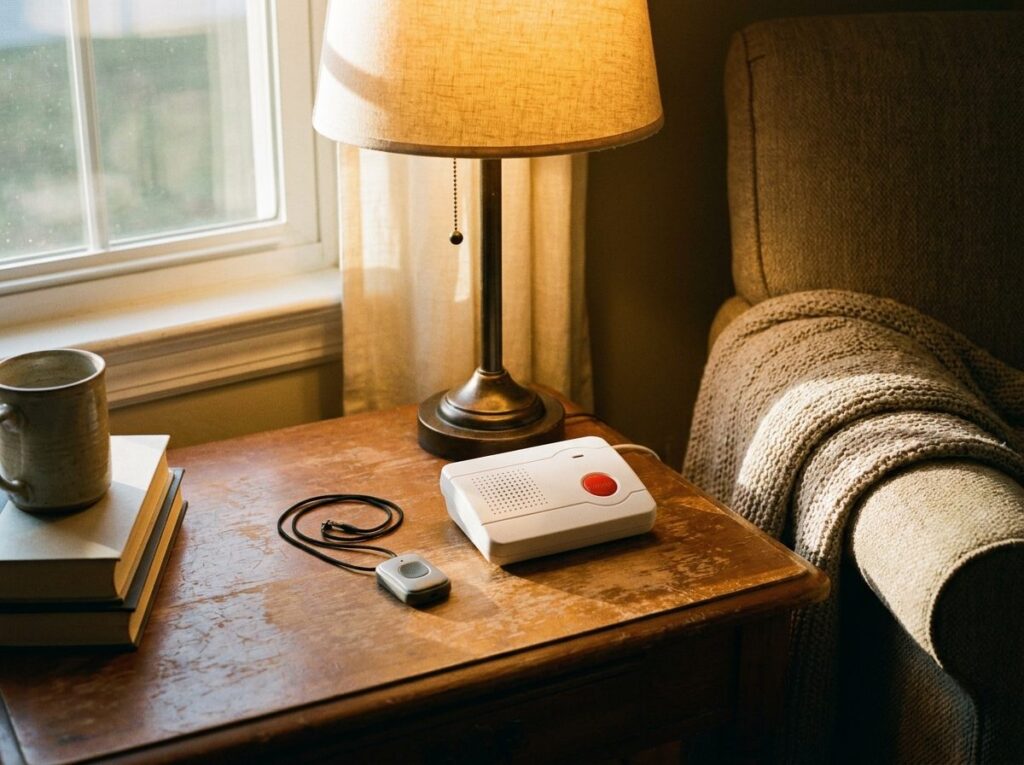
| At-Home Landline | $19.95–24.95/mo | Free equipment, up to 1,300 ft range |
| At-Home Cellular | ~$30/mo | No landline needed |
| On-the-Go (mobile) | ~$30–44/mo | GPS, full US coverage |
| Safe Watch Active (smartwatch) | ~$43.95/mo | Wearable format |
Fall detection: +$5/month on most plans (+$10 on At-Home/On-the-Go combined plans). No activation or equipment fees on any plan. 30-day money-back guarantee. No long-term contract required.
What Sets LifeFone Apart
Price-lock guarantee: once you subscribe, your rate doesn’t increase for as long as you remain a customer — a genuinely uncommon commitment in an industry where promotional pricing often creeps up after the first year or two.
Battery life: the At-Home Landline and At-Home Cellular base units last up to three years without needing a battery change, and the mobile VIPx device runs about 10 days per charge — both well above average for the category.
Response time: independent testing published by the National Council on Aging recorded an average response time of 14 seconds for the At-Home Cellular system, among the fastest publicly tested figures in this review series. LifeFone also holds an A+ rating with the Better Business Bureau.

Free spouse coverage: LifeFone allows a spouse or partner to be added to an at-home plan at no additional monthly cost (though their own wearable device carries a separate charge) — a meaningful saving for couples who both want coverage.
Where LifeFone Costs More Than Expected
A single fully-loaded At-Home Landline plan — combining fall detection, the optional Protection Plan ($5/mo), Activity Assurance ($6/mo), and Daily Check-Ins ($19/mo) — can reach roughly $66/month, considerably more than the advertised starting price. None of these add-ons are required, but it’s worth building your actual expected monthly cost from the base plan plus only the add-ons you genuinely want, rather than assuming the advertised starting price is the full picture.

How LifeFone Compares to Bay Alarm Medical and Medical Guardian
| LifeFone | Bay Alarm Medical | Medical Guardian | |
|---|---|---|---|
| Starting price | $19.95–24.95/mo | $27.95/mo | ~$29.95+/mo |
| Price-lock guarantee | Yes | Not advertised | Not advertised |
| Fall detection add-on | $5/mo (most plans) | $10/mo | Varies |
| Founded | 1976 | — | 2005 |
| BBB rating | A+ | A+ | — |
LifeFone’s price-lock guarantee is its clearest structural advantage over both our Bay Alarm Medical review and our Medical Guardian review — a real commitment competitors generally don’t make as explicitly.
Frequently asked questions
How much does LifeFone cost per month?
Starting at $19.95–24.95/month for the At-Home Landline plan on annual billing; mobile and smartwatch options run higher, up to roughly $44/month before add-ons.
Does LifeFone require a long-term contract?
No. Plans are cancel-anytime with no long-term contract, though annual billing offers the lowest effective monthly rate.
Does LifeFone’s price ever increase after signup?
No — LifeFone offers a price-lock guarantee, meaning your rate stays the same for as long as you remain a subscriber.
Is fall detection included with LifeFone?
Not by default. It’s available as an add-on for $5/month on most plans ($10/month on combined At-Home/On-the-Go plans).
How fast is LifeFone’s response time?
Independent testing recorded an average of 14 seconds for the At-Home Cellular system, among the fastest publicly tested times in this category.
Can I add my spouse to a LifeFone plan?
Yes — LifeFone allows free spouse enrollment on at-home plans, though the spouse’s own wearable device carries its own charge.