She sat at her kitchen table with a legal pad, comparing prices for affordable medical alert systems for seniors. On one side she wrote “$27.” On the other she wrote “$48.” Underneath both she wrote “per month, forever.”
In This Guide
- Overview
- Comparison
- Best Options
- Our Recommendation
Neither number felt right. $27 a month was $324 a year — real money on a fixed income. $48 was $576, and she was not even sure what the extra $21 was buying. And somewhere in the back of her mind was the question she hadn’t written down yet: what if her dad refused to wear it anyway?
If you are doing this math right now, this article is for you.
“Affordable” in the medical alert category is a marketing word. What it usually means is “cheapest monthly price.” What it should mean is “lowest actual cost over the time your parent will use it, including every fee, every add-on they will actually need, and the real cost if the device is lost or damaged.”
We will give you those numbers. All of them. This guide covers everything caregivers need to find genuinely affordable medical alert systems for seniors — not just the cheapest headline rate.
What Do Affordable Medical Alert Systems for Seniors Actually Cost?
The affordable tier in affordable medical alert systems for seniors runs from approximately $19.95/mo to $35/mo for a monitored plan. Below that, you are typically looking at unmonitored systems that call a contact list rather than a professional emergency centre.
But monthly price is only one part of the cost equation. Before you can compare affordable medical alert systems for seniors honestly, you need four numbers from every provider you are considering:
- Monthly monitoring fee (the headline number)
- Activation or setup fee (one-time — often $0 but not always)
- Device or equipment fee (one-time — often $0 on subscription plans but sometimes $25–$50)
- Add-on costs you will actually need — fall detection ($5–$15/mo), cellular backup ($3–$5/mo)
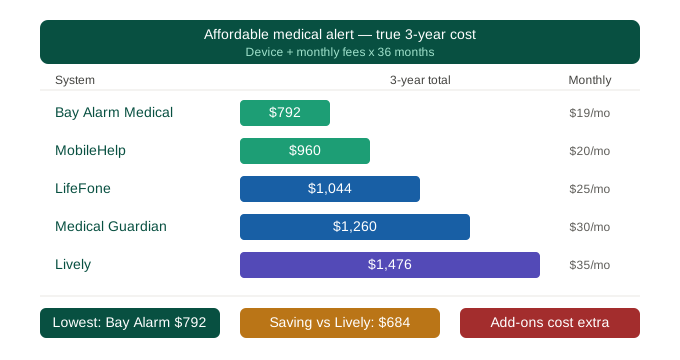
Add those together for 12 months. That is your Year 1 cost for affordable medical alert systems for seniors. Multiply the monthly total by 36 to get Year 3. The system that looks cheapest in month one is not always cheapest when your parent is still using it in year two.
Complete Cost Breakdown — Every Affordable System, Every Fee
This is the table that does not exist anywhere else in the affordable medical alert systems for seniors space. No competitor publishes it. We built it from the ground up.
All pricing is estimated based on publicly available and industry data. Confirm directly with providers before purchasing.
BAY ALARM MEDICAL
- Base monitoring: $27.95/mo (in-home) / $34.95/mo (GPS)
- Activation fee: $0
- Device fee: $0 (included with subscription)
- Fall detection add-on: $10/mo
- Annual promo: 17% off with code OFFER17
- Year 1 (basic, no fall detection): $335.40
- Year 1 (with fall detection): $455.40
- Year 1 (with promo, fall detection): $377.98
- Year 3 (with fall detection, no promo): $1,366.20
Verdict: Widest in-home range in the affordable tier and a strong all-round package — though with fall detection added, LifeFone now has the lower Year 3 cost.
LIFEFONE
- Base monitoring: $29.95/mo (at-home) / $39.95/mo (GPS)
- Activation fee: $25 (one-time)
- Device fee: $0
- Fall detection add-on: $5/mo
- Year 1 (basic, no fall detection): $384.40 (including $25 activation)
- Year 1 (with fall detection): $444.40
- Year 3 (with fall detection): $1,284.40 (activation counted once)
Verdict: Good balance of features and service quality. Higher Year 1 cost due to activation fee, but competitive from Year 2 onward.
QMEDIC
- Base monitoring: $19.95/mo (landline) / $24.95/mo (cellular)
- Activation fee: $0
- Device fee: $0 on subscription plan / $149–$249 device-only purchase
- Fall detection: Not available on all plans — confirm before purchasing
- Year 1 (cellular, no fall detection): $299.40
- Year 3 (cellular): $898.20
Verdict: Cheapest monthly price in the monitored category. Limited fall detection options. Best for lower-risk seniors without fall detection need.
MOBILEHELP
- Base monitoring: $27.95/mo (Solo in-home)
- Activation fee: $0
- Device fee: $0
- Fall detection add-on: $5/mo
- Year 1 (basic): $335.40
- Year 1 (with fall detection): $395.40
- Year 3 (with fall detection): $1,186.20
Verdict: Comparable to Bay Alarm on price but without the range advantage (600 ft vs 1,000 ft). Good for small homes.
LIFEFONE
- Base monitoring: $24.95/mo annual (or $29.95/mo month-to-month)
- Activation fee: $0
- Device fee: $0
- Fall detection add-on: $5/mo
- Year 1 (with fall detection, annual): $359.40
- Year 3 (with fall detection, annual): $1,078.20
Verdict: Lowest base price in the affordable tier. With fall detection, total is $29.95/mo on an annual plan — well below Bay Alarm with fall detection ($37.95/mo). 30-day money-back guarantee.
MEDICAL GUARDIAN (for comparison — not in the affordable tier)
- Base monitoring: $37.95/mo (Classic)
- Fall detection: $10/mo add-on
- Year 1 (with fall detection): $575.40
- Year 3 (with fall detection): $1,726.20
Note: Included for comparison only. Significantly more expensive. Better monitoring quality but costs $360 more than Bay Alarm over 3 years.
The Cheapest Options Under $30 Per Month
QMedic — Lowest Monthly Rate ($19.95–$24.95/mo)
QMedic is the cheapest monitored medical alert system in the category. The landline plan at $19.95/mo is the lowest monthly price available for professional monitoring. The cellular plan at $24.95/mo works without a landline.
Where it wins: Absolute lowest monthly cost. No contract. Month-to-month cancellation.
Where it loses: Limited fall detection availability. Smaller brand with less name recognition. Less robust customer service infrastructure than Bay Alarm or LifeFone.
Best for: Lower-risk seniors who primarily need a monitored connection without fall detection. Seniors on very tight fixed incomes where monthly cost is the decisive factor.
Bay Alarm Medical — Best Value at $27.95/mo
Bay Alarm Medical is our Editor’s Choice for affordable medical alert systems. At $27.95/mo with a 1,000 ft range — the widest in the affordable category — it delivers more coverage at the same price point as every competitor. The $10/mo fall detection add-on brings the total to $37.95/mo for a fully-protected system.
The OFFER17 promo code (17% off annual plans) reduces the effective monthly cost to approximately $23.20 for the base plan — lower than QMedic’s cellular plan.
Where it wins: Best range (1,000 ft), cheapest fall detection add-on, lowest Year 3 cost among full-featured affordable systems. No contract.
Where it loses: Slightly less recognised brand than Medical Guardian among consumers starting their research with brand familiarity.
Best for: Most caregivers in the affordable tier. Singles, partners of seniors, adult children on a budget.
MobileHelp and LifeFone — Solid Alternatives
MobileHelp starts at $27.95/mo and has a simple interface that works well for seniors or caregivers managing setup remotely. LifeFone’s at-home plan starts from $24.95/mo on an annual plan (or $29.95/mo month-to-month), with no equipment or activation fee and a 30-day money-back guarantee. Both offer 24/7 professional monitoring with no long-term contract.
Neither matches Bay Alarm’s 1,000 ft range (both cover approximately 600 ft) — though their fall detection add-ons ($5–$6/mo) undercut Bay Alarm’s $10/mo.
Mid-Range Affordability — When Spending a Little More Gets You a Lot More
At $28–$35/mo, you move from basic monitored coverage into systems with GPS, longer battery life, and stronger fall detection options.
LifeFone At-Home ($29.95/mo + $25 activation) LifeFone
The $25 activation fee is the only meaningful upfront cost on LifeFone’s at-home plan. After that, you get 1,000 ft range (matching Bay Alarm), fall detection available for $5/mo, and no contract. LifeFone’s customer service reputation is consistently rated among the best in the category — important when something goes wrong at 2am.
Bay Alarm Medical SOS GPS+ ($37.95/mo — fall detection included) Bay Alarm Medical
Stepping up to the SOS GPS+ plan brings GPS tracking and built-in fall detection for $37.95/mo — no separate add-on needed. This is the strongest mid-range option for active seniors who move between home and outdoors. See also our article on fall detection for a full comparison of GPS fall detection plans.
What You Actually Need vs What You Can Skip
This is the section most caregivers need and almost no one provides. Not every feature is worth paying for.
Must-have: Professional monitoring. An unmonitored system that only calls your contact list is not sufficient for a senior who lives alone or who might be unconscious during an emergency. This is the one feature where spending more is always justified.
Probably must-have: Fall detection. If your parent is at any meaningful fall risk — and most seniors over 75 are — fall detection is worth the $5–$10/mo add-on. The cost of a single ambulance call far exceeds the annual cost of fall detection.
Depends on lifestyle: GPS tracking. If your parent does not leave the home regularly, GPS is an unnecessary cost. If they still drive short distances, walk independently, or spend time in the garden beyond your home’s boundaries, GPS is worth adding.
Depends on home setup: Cellular backup. If your parent has a reliable landline, cellular backup (typically $3–$5/mo extra) is optional. If they have no landline or an unreliable connection, cellular backup ensures the system works during outages.
Nice-to-have, not essential: Smartphone app. Caregiver apps that show device location and alert history are useful but not safety-critical. Do not pay a premium solely for app features.
Affordable Fall Detection for Parents With Dementia
If your parent has dementia, the affordable tier still has options — but the calculus changes.
The core problem with dementia and affordability: you may need GPS tracking (for wandering risk) and auto-fall detection (because they may not press the button), which together push the monthly cost up from the $28–$30 range toward $35–$40.
Bay Alarm Medical SOS GPS+ at $37.95/mo includes both GPS and fall detection in one plan. It is the most affordable option that covers wandering, outdoor safety, and automatic fall alert together.
For very tight budgets: A base at-home plan with fall detection ($37.95/mo at Bay Alarm) covers the in-home fall risk. Pair it with a low-cost GPS tracker (separate device, approximately $15–$25/mo) if wandering is the primary concern. This is not ideal from a simplicity standpoint, but it works.
The Hidden Fees Every “Affordable” System Has
Here is what the monthly price does not tell you:
Activation fees: LifeFone charges $25 upfront. Most others charge $0. Always ask before purchasing.
Shipping: Most providers offer free shipping on new subscriptions. Confirm before assuming.
Equipment return: If you cancel, most providers require you to return the device. Failure to return results in an equipment charge of $100–$300. Ask about the return process and postage responsibility before signing up.
Cancellation: All major providers are month-to-month with no long-term contract. However, if you have paid annually for the discount, refund policies for unused months vary. Ask specifically: “If I cancel in month 8 of an annual plan, do I get a refund for months 9–12?”
Fall detection add-on billing: The add-on fee appears on your second bill, not your first. Your first month looks cheaper than every subsequent month. Factor in the add-on cost from month one when comparing systems.
Battery replacement: Pendant batteries on affordable medical alert systems for seniors are typically replaced by the manufacturer at no cost if the battery fails within the warranty period. Out-of-warranty battery replacement policies vary — ask before purchasing.
How to Pay Even Less — Annual Discounts, FSA/HSA, and Multi-Device Options
Annual billing discount: Bay Alarm Medical’s OFFER17 code gives 17% off affordable medical alert systems for seniors when you pay annually. At $27.95/mo, that saves approximately $57/year. Always compare annual vs monthly billing — the discount is typically larger than it looks when extrapolated over three years.
FSA and HSA: Medical alert system devices are generally FSA and HSA eligible. Monthly monitoring fees are typically not eligible, but device costs on device-purchase plans qualify. For subscription plans, the device is usually provided as part of the service rather than a separate purchase — check with your FSA/HSA administrator whether the monthly monitoring fee qualifies under your specific plan.
Multi-device discount: Some providers offer discounts for spouses or partners on the same account. Bay Alarm Medical has a two-pendant option. LifeFone offers a partner pendant add-on. If two members of the household need coverage, a multi-device plan often costs less than two separate subscriptions.
What If the Cheapest Option Still Feels Like Too Much?

If cost remains prohibitive after the above considerations, here are additional pathways:
Medicare Advantage supplemental benefits: Some Medicare Advantage plans cover PERS devices as a supplemental benefit at no additional cost to the member. Call the plan’s member services line and ask specifically about PERS or medical alert device coverage.
State Medicaid HCBS waivers: Many states fund medical alert systems for qualifying low-income seniors through Home and Community-Based Services waivers. Contact your state’s Medicaid office or the Area Agency on Aging.
VA benefits: Veterans may qualify for assistive devices including medical alert systems through the VA’s prosthetic and sensory aids programme.
Non-profit and community programmes: Some Area Agencies on Aging and local non-profit organisations fund or subsidise PERS devices for low-income seniors. Availability varies by region — contact your local AAA to ask.
Family cost-sharing: If siblings are involved, dividing the annual cost of a Bay Alarm or LifeFone subscription between two or three people brings the individual cost to $10–$15/month. Frame it as a family decision rather than one person’s responsibility.
Frequently Asked Questions
What is the cheapest medical alert system?
QMedic’s landline plan at $19.95/mo is the cheapest monitored medical alert system currently available. Bay Alarm Medical starts at $27.95/mo; LifeFone’s at-home plan starts from $24.95/mo on an annual plan. However, cheapest monthly rate does not equal lowest total cost — see the Year 1/2/3 comparison above.
How much does Bay Alarm Medical cost per month?
Bay Alarm Medical is the most affordable entry point among affordable medical alert systems for seniors — the in-home plan starts at $27.95/mo. With fall detection add-on: $37.95/mo — the same price as the SOS GPS+ plan, which includes GPS and fall detection. Annual billing with the OFFER17 promo code reduces the effective monthly rate by approximately 17%.
Are affordable medical alert systems for seniors reliable in emergencies?
Yes — provided they include professional monitoring. The emergency response technology in the affordable tier ($19.95–$35/mo) is functionally equivalent to premium systems. The primary differences at higher price points are fall detection accuracy, GPS precision, device design, and customer service response speed.
Does MobileHelp have any hidden fees?
MobileHelp’s base plan has no activation fee and no equipment fee. The main additional cost to consider is the fall detection add-on ($5/mo) if needed, and standard cellular backup charges. Equipment must be returned upon cancellation.
Are there discounts for paying annually?
Yes — and discounts are one of the most underused tools when buying affordable medical alert systems for seniors. Bay Alarm Medical offers 17% off with the OFFER17 promo code on annual plans. LifeFone and others occasionally offer similar annual billing discounts. Always ask specifically about annual pricing when calling to purchase.
Can I cancel at any time?
All major affordable providers — Bay Alarm Medical, LifeFone, QMedic, MobileHelp — are month-to-month with no long-term contract. Annual plans may have prorated refund policies for unused months — confirm before committing.
What features do I lose with the cheapest plan?
The cheapest plans for affordable medical alert systems for seniors typically exclude fall detection (usually a $5–$10/mo add-on), GPS tracking (usually requires a higher-tier plan), and cellular backup (may require a separate add-on or landline). Professional monitoring — the core safety function — is typically included in all plans from major providers of affordable medical alert systems for seniors.
Our Final Recommendation
For most caregivers in the affordable tier, Bay Alarm Medical is the right choice. Bay Alarm Medical
It is not always the cheapest option in month one. But it is the system with the widest in-home coverage (1,000 ft), a $10/mo fall detection add-on, no activation fee, no contract, and a competitive three-year total even with fall detection included — which most seniors should include.
Use the OFFER17 promo code on annual billing to reduce the effective monthly cost further. Check your parent’s Medicare Advantage plan for PERS coverage before paying anything. If FSA or HSA funds are available, ask about device-purchase options.
If your primary constraint is absolute lowest monthly cost and your parent does not need fall detection, QMedic at $19.95/mo is worth considering. QMedic
If your parent’s doctor or specialist has recommended LifeFone by name, their at-home plan is a strong choice with good customer service and comparable features to Bay Alarm after the Year 1 activation fee. LifeFone
If you are comparing costs across plan types, see our article on no monthly fee systems for a full breakdown of device-purchase vs subscription pricing.
You are not choosing between your parent’s safety and your budget. You are finding the point where both are handled — and that point exists at $27–$31/mo for most seniors with professional monitoring and fall detection included.
This article was researched and written by the SafeElderCare editorial team, which evaluates senior safety products to help family caregivers make confident, informed decisions for the people they love most.